



What's Happening?
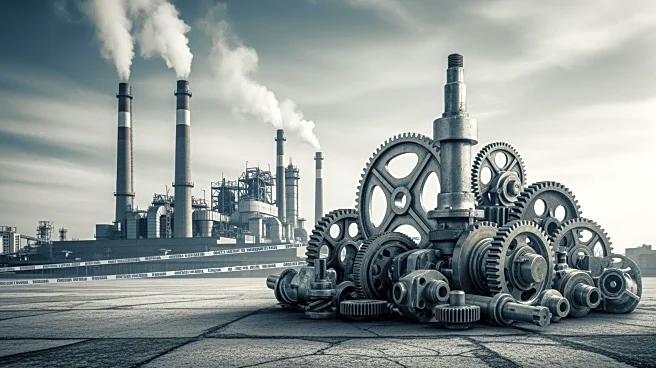
Russia's defense-industrial base (DIB) has seen significant growth in 2025, with investments in the manufacturing sector rising by 23%, according to a report by the Institute for the Study of War (ISW). This growth is driven by the Kremlin's prioritization
of the DIB, which employs over 3.8 million people. Despite the overall economic slowdown, the manufacturing industries grew by 3% by the end of 2025. The Industry Development Fund, providing low-interest loans to manufacturers, is a key driver of this growth. However, the focus on the defense sector comes at a cost to Russian citizens, as banks pass on financial pressures to consumers, leading to inflation and job reductions. The Russian government has also raised VAT from 20% to 22%, further burdening the population.
Why It's Important?
The expansion of Russia's defense-industrial base highlights the Kremlin's commitment to military objectives, even at the expense of economic stability and citizen welfare. The prioritization of defense spending over other sectors could exacerbate economic challenges, including inflation and reduced consumer spending power. This situation underscores the impact of Western sanctions and the ongoing conflict in Ukraine on Russia's economy. The increased financial burden on citizens may lead to social unrest and pressure on the government to address economic disparities. The developments in Russia's defense industry also have implications for global security dynamics, as they reflect the country's continued focus on military capabilities.
What's Next?
As Russia continues to prioritize its defense-industrial base, the economic strain on citizens is likely to persist. The government may face increasing pressure to balance military ambitions with domestic economic needs. Internationally, the situation could lead to further sanctions or diplomatic efforts to address Russia's military activities. The ongoing conflict in Ukraine and the response from Western countries will play a crucial role in shaping Russia's economic and military strategies. Domestically, the Russian government may need to implement measures to mitigate the economic impact on citizens, such as social welfare programs or economic reforms.