






What's Happening?
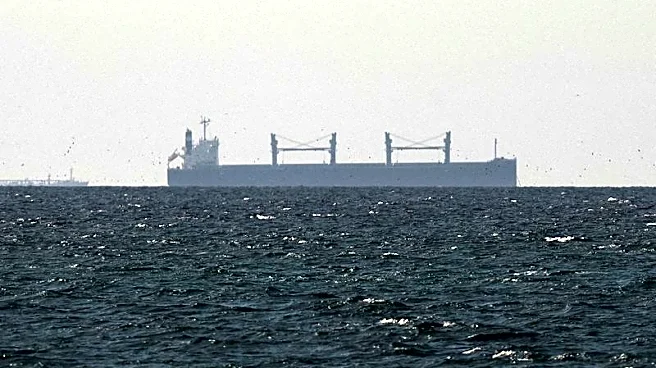
Iran's Islamic Revolutionary Guard Corps (IRGC) has implemented a formal system for charging merchant ships cryptocurrency for passage through the Strait of Hormuz. The system involves a tiered pricing structure, with fees negotiated case-by-case, starting
at $2 million for large vessels. Payment is accepted in cryptocurrency or Chinese yuan, reducing exposure to the U.S. financial system. The IRGC conducts security checks on vessels to ensure no links to hostile states before issuing a pass code for transit. The system has led to limited relief for the traffic backlog in the Arabian Gulf, with hundreds of vessels still trapped.
Why It's Important?
The use of cryptocurrency for toll payments in the Strait of Hormuz represents a significant shift in maritime commerce, potentially bypassing traditional financial systems and sanctions. This development could influence global shipping practices and financial transactions, as companies adapt to new payment methods. The situation underscores the strategic importance of the Strait of Hormuz and the geopolitical tensions surrounding it, affecting global energy markets and international relations. The toll system may also raise legal and ethical questions regarding compliance with international law and sanctions.
What's Next?
Shipping companies and governments will continue to navigate the complexities of the toll system, potentially seeking diplomatic solutions to ensure free passage. The use of cryptocurrency may prompt discussions on its role in international trade and finance, influencing regulatory frameworks. The situation may lead to increased military presence in the region to safeguard shipping lanes, as tensions persist. Legal challenges to the toll's legitimacy under international maritime law could arise, involving the International Maritime Organization.