



What's Happening?
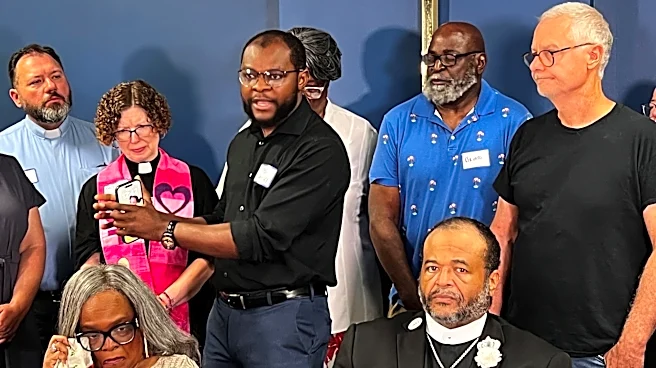
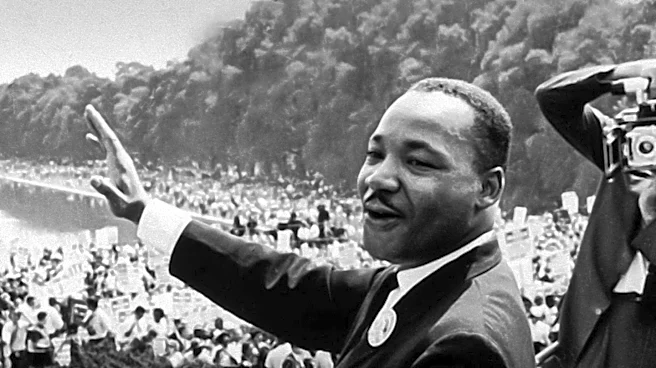
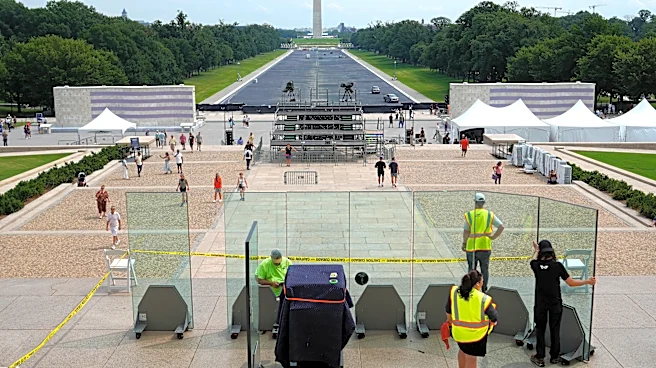
Filmmaker Spike Lee, alongside Rev. Al Sharpton and Martin Luther King III, participated in the 'Defend the Vote' March on Washington D.C. The event, held on Friday, August 28, 2026, aimed to advocate for voting rights, civil rights, and racial justice,
echoing the historic 1963 March on Washington. Hundreds gathered near the Lincoln Memorial to protest recent changes to voting laws and redistricting efforts that critics argue are detrimental to Black Americans. Rev. Sharpton, founder of the National Action Network, emphasized the march's importance, noting it was the first since the Supreme Court nullified key provisions of the Voting Rights Act. Senator Bernie Sanders also spoke, highlighting what he called a "very dangerous moment in American history" and attributing threats to voting rights to President Trump and the Supreme Court's conservative majority.
Why It's Important?
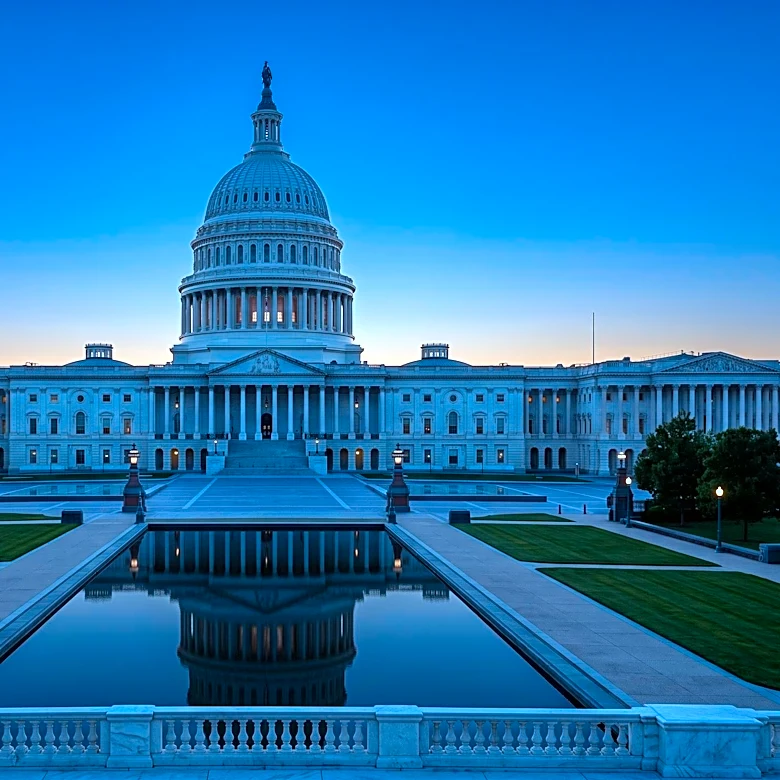
This march is critically important as it addresses the erosion of voting rights in the U.S., particularly following the Supreme Court's decision in Louisiana v. Callais. This ruling reinterpreted the Voting Rights Act of 1965, allowing Southern states to redraw congressional maps in ways that could diminish Black communities' equal representation. The event underscores ongoing concerns about the integrity of the electoral system and the potential for voter suppression. The participation of prominent figures like Spike Lee, Rev. Sharpton, and Martin Luther King III amplifies the message and draws national attention to these issues. The historical parallel to the 1963 March on Washington highlights the persistent struggle for civil rights and the need for continued advocacy to protect democratic principles and ensure equitable political participation for all citizens.
What's Next?
The 'Defend the Vote' march is likely to galvanize further activism and legal challenges against restrictive voting laws and redistricting efforts. Organizers and civil rights groups will continue to monitor legislative actions and court decisions related to voting rights, especially as the midterm elections approach. The event's focus on the Supreme Court's ruling suggests that future legal battles are probable, aiming to restore or strengthen protections under the Voting Rights Act. Political leaders and civil society groups are expected to intensify their efforts to mobilize voters and advocate for federal legislation that safeguards electoral integrity. The march also serves as a call to action for citizens to engage more actively in the political process, emphasizing that the fight for voting rights is an ongoing struggle that requires sustained public engagement.
Beyond the Headlines
The 'Defend the Vote' march reveals deeper societal tensions surrounding race, power, and democracy in the United States. The debate over voting rights is not merely about procedural changes but reflects fundamental questions about who has a voice in American governance and the extent to which historical injustices continue to shape contemporary political landscapes. The Supreme Court's decision and subsequent redistricting efforts raise ethical concerns about the manipulation of electoral boundaries to achieve partisan advantage, potentially at the expense of minority representation. This ongoing struggle highlights the fragility of democratic institutions and the constant need for vigilance to protect civil liberties. The march also serves as a powerful reminder that the legacy of the Civil Rights Movement is not a static historical event but a dynamic and evolving struggle that continues to demand attention and action from all segments of society.