




What's Happening?
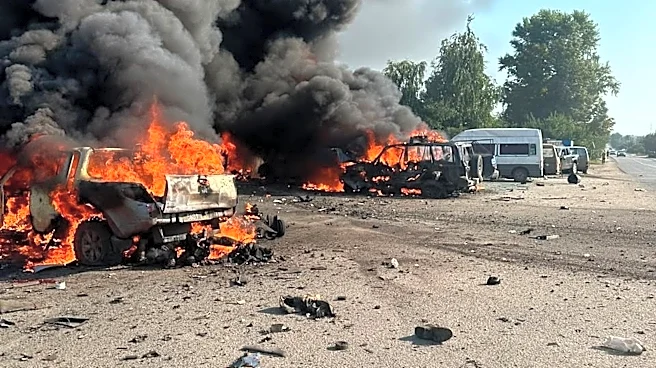
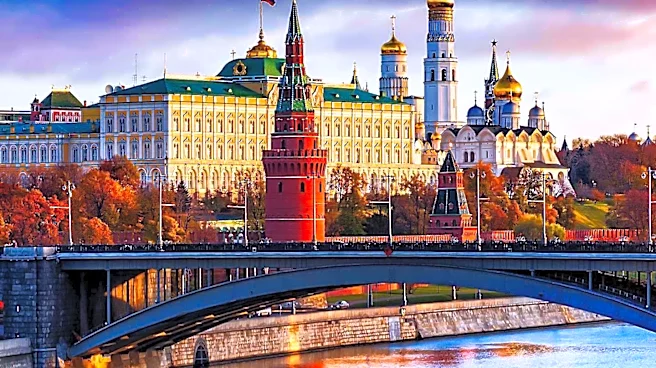
According to EUobserver, the ongoing military actions by the Kremlin, particularly the 2022 invasion of Ukraine, are not primarily driven by traditional state security interests but rather by the political survival of its leadership. The article, citing
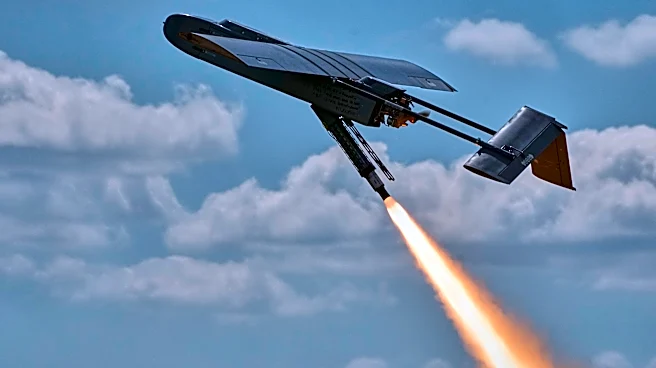
research from institutions like the Institute for the Study of War (ISW) in the US and the Royal United Services Institute (RUSI) in the UK, notes that Moscow’s missile strikes against Ukraine have yielded limited military gains. This suggests a departure from war as a rational instrument of statecraft, where military force is used to conquer territory, secure borders, or protect strategic interests. Instead, the use of military force has become essential to the regime’s survival, with aggression being a self-reinforcing mechanism in highly-personalized regimes. The Kremlin's narrative portrays Russian aggression as a necessary response to external threats, elevating Vladimir Putin from a political leader to a symbolic defender of the 'Russian World'.
Why It's Important?
This analysis is important because it reframes the understanding of the conflict, suggesting that Western diplomatic efforts based on a transactional logic—assuming the Kremlin desires peace if offered the right incentives—may be fundamentally misguided. If the war is indeed a mechanism for the political survival of the leadership rather than a response to genuine security needs, then traditional diplomatic approaches may fail to address the root causes of the conflict. This perspective implies that peace is profoundly dangerous for the current Russian leadership, as it would challenge the foundational narrative of existential threat that legitimizes their rule. For U.S. foreign policy and international relations, this understanding necessitates a re-evaluation of engagement strategies with Russia, moving beyond the assumption of rational state behavior to consider the internal dynamics and psychological underpinnings of the regime.
What's Next?
The challenge for Western diplomacy, as highlighted by EUobserver, is to engage in dialogue without validating the Kremlin's fundamental premises. Policymakers must reject the notion that the war is driven by the security needs of the Russian state, recognizing it instead as a strategy for the political survival of its leadership. This implies a need for a more nuanced approach that acknowledges the internal logic of the regime. Future diplomatic efforts may need to focus on undermining the alternative reality constructed by the Kremlin, both externally and internally, to reduce the political and psychological usefulness of the conflict. This could involve sustained efforts to counter propaganda and support objective truth, potentially leading to a shift in the regime's narrative and, consequently, its actions.
Beyond the Headlines
The deeper implication of this analysis lies in the ethical and cultural dimensions of authoritarian rule. The article draws on the insights of Hannah Arendt and Erich Fromm, who explain how a leader’s personal fears can become the strategic logic of the state. Arendt's argument that aggression must not be confused with genuine political power, and Fromm's view of aggression as a compensatory response to psychological vulnerability, suggest that the conflict is rooted in the leader's persona. The systematic redefinition of language, portraying aggression as defense and occupation as liberation, creates a disorienting information environment that erodes trust in democratic institutions. This self-reinforcing loop of propaganda and aggression traps the Kremlin in its own created reality, making peace a threat to its legitimacy. Understanding these psychological and ideological underpinnings is crucial for developing long-term strategies to address such conflicts.