






What's Happening?
The International Committee of the Red Cross (ICRC), a neutral, impartial, and independent humanitarian organization, is celebrating over 160 years since its founding in Geneva. Established in 1863, the ICRC's mandate is rooted in the Geneva Conventions,
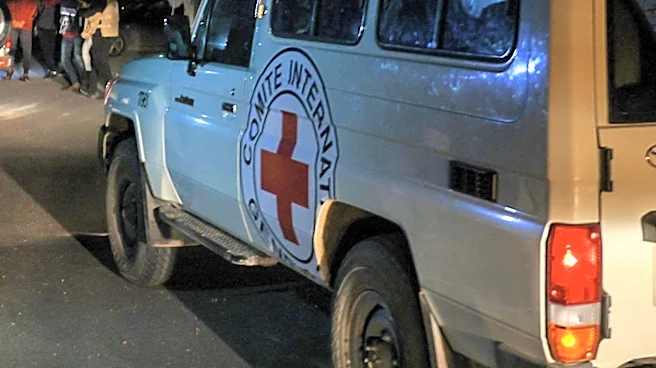
which were partly inspired by Swiss businessman Henry Dunant's experience at the Battle of Solferino in 1859. Dunant witnessed the lack of care for wounded soldiers, leading to his 1862 book and the subsequent formation of a five-member committee that became the ICRC. The organization's emblem, a red cross on a white background, is a reversal of the Swiss federal colors and was formally recognized in the first Geneva Convention in 1864 as a tribute to Switzerland. The ICRC operates globally, with over 17,300 staff in more than 90 countries, working in protection, assistance, prevention, and cooperation with 191 National Red Cross and Red Crescent Societies worldwide. It has been awarded the Nobel Peace Prize three times.
Why It's Important?
The ICRC's enduring presence and work are crucial for upholding international humanitarian law (IHL) and protecting human dignity in conflicts worldwide. Its neutrality and impartiality allow it to access areas and populations often beyond the reach of other organizations, providing life-saving aid, reconnecting families, and locating missing persons. The organization's engagement with authorities and armed forces, often confidentially, is vital for pressing for access to detainees and advocating for compliance with IHL, thereby protecting non-combatants from the devastating impacts of war. The ICRC's historical role in shaping the Geneva Conventions underscores its foundational importance in establishing the legal framework for humanitarian action. Its continued efforts are essential in a world where armed conflicts persist, ensuring that basic human rights and protections are not entirely eroded during hostilities.
What's Next?
The ICRC will continue its global operations, focusing on its core mandate of protecting human dignity and alleviating suffering caused by war and armed violence. This includes ongoing efforts to deliver aid, facilitate family reunification, and advocate for the respect of international humanitarian law. The organization will likely continue to engage with state leaders and international bodies to galvanize political commitment to IHL, as evidenced by its involvement in initiatives like the Global Initiative to galvanize political commitment to international humanitarian law. Future efforts will also involve adapting to new challenges in contemporary warfare, including digital threats, and ensuring the impartial and consistent application of existing IHL obligations. The ICRC will also maintain its collaborative relationships with National Red Cross and Red Crescent Societies to maximize its global reach and impact.
Beyond the Headlines
The ICRC's longevity and consistent adherence to its principles highlight the enduring need for humanitarian intervention in a world frequently marked by conflict. Its emblem, the red cross, transcends national and political boundaries, serving as a universally recognized symbol of protection and aid, strictly protected under international humanitarian law. This symbolic power, coupled with its practical work, reinforces the idea that even in the most brutal circumstances, there is a shared human responsibility to mitigate suffering. The ICRC's history also serves as a testament to the power of individual action, as Henry Dunant's initial observations led to the creation of a global institution. The organization's ability to operate across diverse political landscapes, often confidentially, underscores the delicate balance required to maintain trust and effectiveness in highly sensitive environments, making it a critical actor in global ethics and international relations.