
What's Happening?
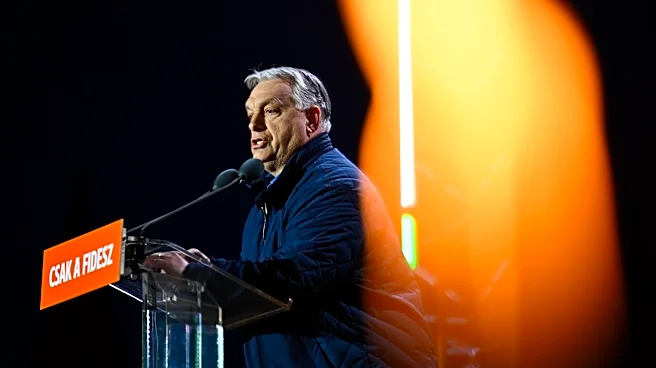
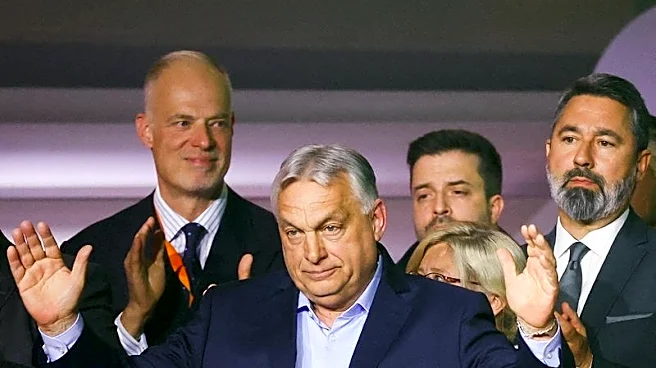
Hungary's Prime Minister Viktor Orban conceded defeat to the center-right Tisza party led by Peter Magyar in a landmark election. This marks the end of Orban's 16-year rule, as the Tisza party secured
a two-thirds majority in the 199-member parliament. The election saw a record turnout of 79%, with many Hungarians viewing it as a pivotal moment for the country. Orban's defeat is significant for Hungary's relationship with the European Union, as it may lead to the unblocking of a 90-billion-euro loan to Ukraine, which Orban had previously opposed. The election results are also expected to influence Hungary's role within the EU, potentially ending its adversarial stance.
Why It's Important?
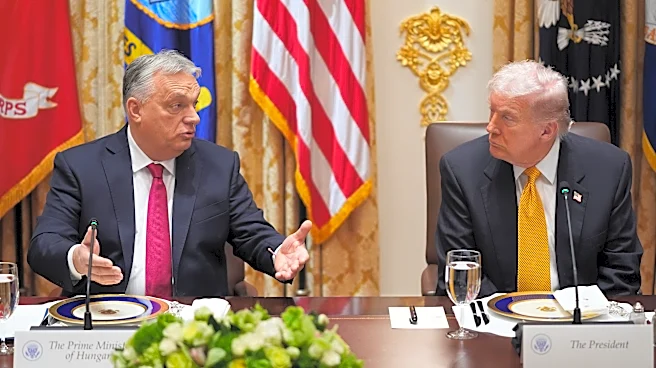
Orban's defeat has broad implications for Hungary's domestic and international policies. Domestically, it signals a shift away from Orban's 'illiberal democracy' model, which has been criticized for eroding democratic standards. Internationally, the change in leadership could realign Hungary with EU policies, particularly regarding support for Ukraine. This shift may also affect Hungary's relations with the U.S., as Orban was a close ally of President Trump. The election outcome could influence right-wing movements across Europe and the U.S., as Orban's governance style was seen as a blueprint for similar movements.
What's Next?
The Tisza party, under Peter Magyar, is expected to begin dismantling the systems put in place by Orban's Fidesz party. This includes addressing issues related to democratic governance and media freedom. The new government will likely focus on strengthening ties with the EU and supporting Ukraine. The transition may also involve negotiations with the EU to release previously suspended funds to Hungary. Observers will be watching how the Tisza party navigates these challenges and whether it can maintain its parliamentary majority while implementing its agenda.