



What's Happening?
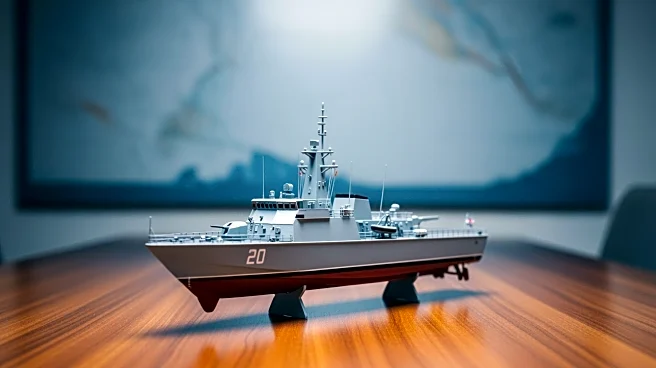
The U.S. Navy has repositioned two of its counter-mine vessels, the USS Santa Barbara and USS Tulsa, from the Middle East to Singapore. These Independence-class littoral combat ships, equipped with mine countermeasures mission packages, are now operating
within the U.S. Seventh Fleet area of responsibility. The move aligns with an agreement between the U.S. and Singapore to use the latter as a logistics and maintenance hub for such vessels. This strategic repositioning follows the decommissioning of four Avenger-class mine countermeasures ships in the Middle East last year. The ships are designed to detect and destroy naval mines, and their relocation is seen as a strategic move to reduce the number of targets in the Middle East.
Why It's Important?
This repositioning is significant as it reflects the U.S. Navy's strategic shift in maritime operations, focusing on enhancing its presence in the Asia-Pacific region. By utilizing Singapore as a logistics hub, the U.S. can maintain a robust naval presence in a region critical for global trade and security. The move also underscores the importance of international partnerships in maintaining maritime security. The repositioning could impact regional security dynamics, potentially deterring naval threats and ensuring the safety of crucial maritime routes. It also highlights the evolving nature of naval warfare, where mine countermeasures play a vital role in maintaining open and secure sea lanes.
What's Next?
The repositioning of these ships may lead to increased joint exercises and collaborations between the U.S. and Singapore, enhancing interoperability and readiness. The U.S. Navy may continue to evaluate and adjust its fleet deployments to address emerging threats and maintain strategic advantages. Additionally, other nations in the region may respond by adjusting their naval strategies, potentially leading to shifts in regional maritime security policies.