


What's Happening?
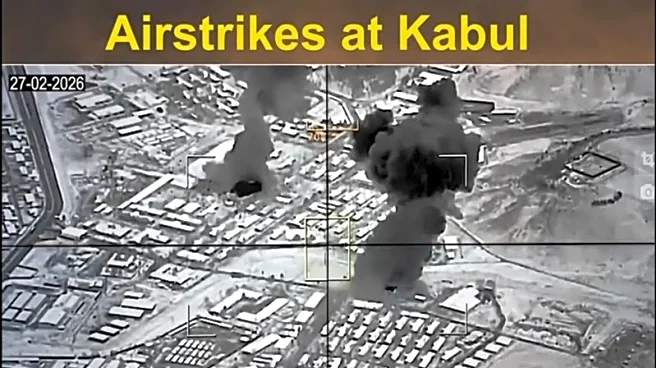
Pakistan launched airstrikes in Kabul and other Afghan provinces following a cross-border attack by Afghanistan. The strikes targeted Afghan military facilities, reportedly destroying brigade bases. Afghanistan's government claims the attack was in retaliation
for Pakistani airstrikes that killed civilians. The situation has escalated tensions between the two countries, undermining a Qatar-mediated ceasefire. Both sides report differing casualty figures, with Afghanistan claiming significant Pakistani losses and Pakistan downplaying its casualties. The U.N. has urged both nations to protect civilians and resolve differences diplomatically.
Why It's Important?
This escalation highlights the fragile nature of peace efforts between Afghanistan and Pakistan. The ongoing conflict poses risks to regional stability and could lead to further humanitarian crises, particularly affecting civilians in border areas. The violence also complicates international diplomatic efforts to mediate peace and could strain relations with countries involved in the ceasefire negotiations. The situation underscores the challenges in addressing militant activities and border security in the region.
What's Next?
Both countries may face international pressure to de-escalate and return to diplomatic negotiations. The continuation of military actions could lead to broader regional instability and impact international relations. The U.N. and other international bodies may increase efforts to mediate and prevent further violence. The situation remains volatile, with potential for further military engagements if diplomatic solutions are not pursued.