
What's Happening?
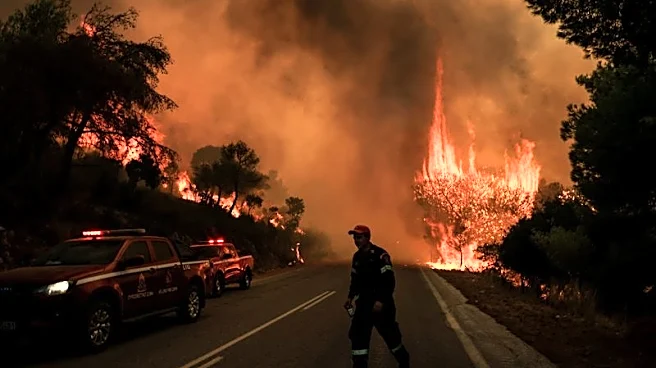
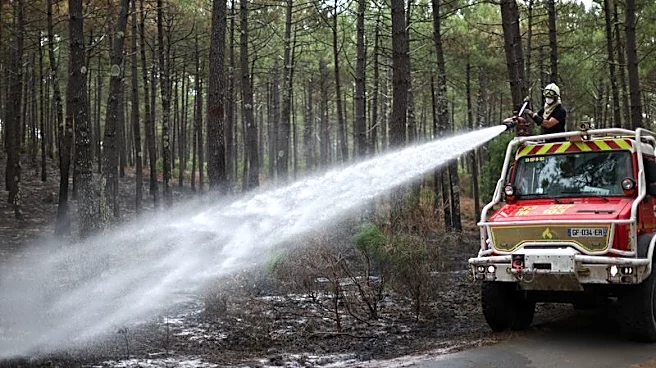
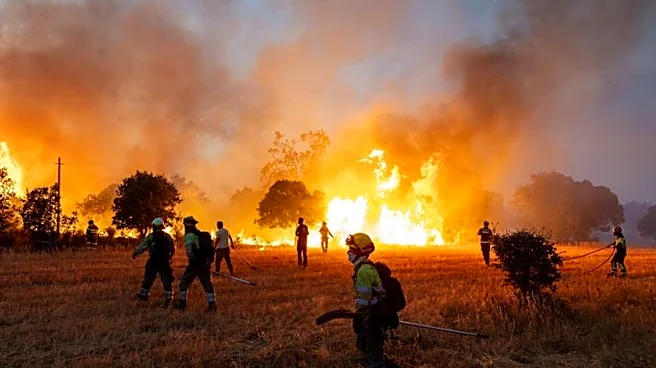
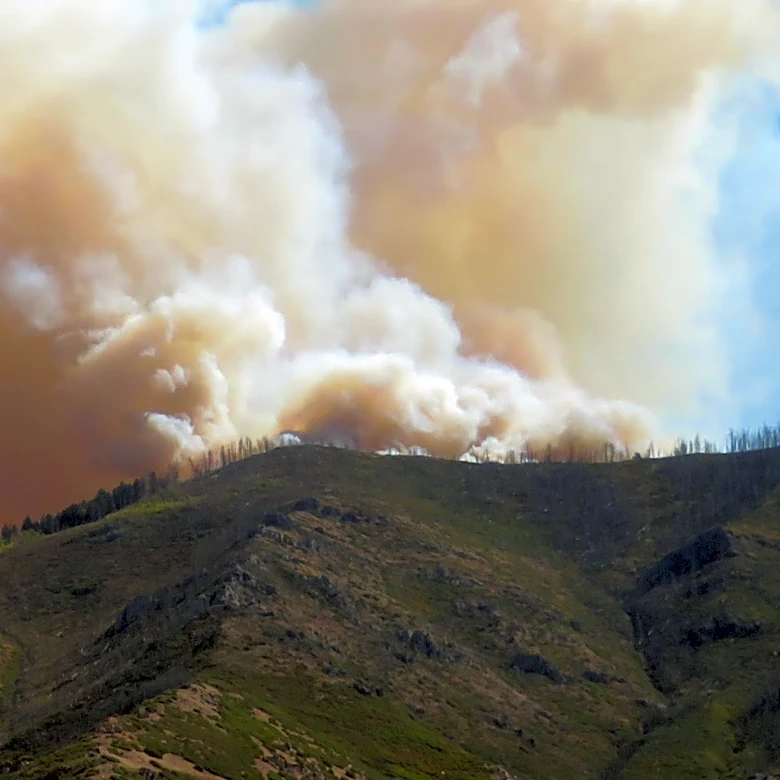
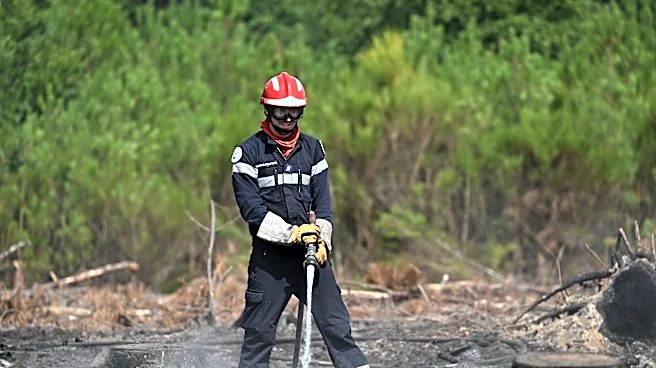
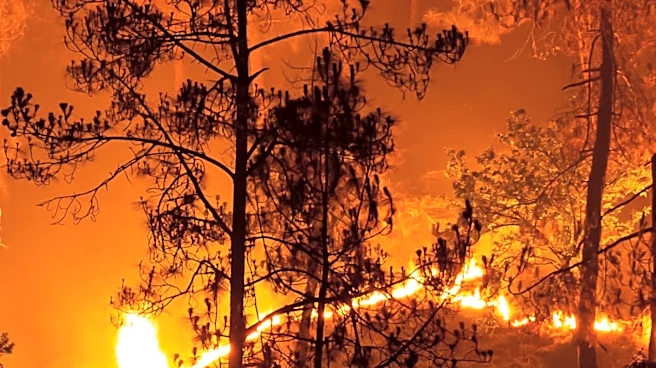
Wildfires driven by strong winds are burning across multiple regions in Greece, including areas near Athens. The fires have prompted large-scale firefighting operations and emergency evacuations. In the region of Viotia, northwest of Athens, firefighters
are struggling to contain the blazes as winds exceed 73 kph, complicating efforts. Residents from towns such as Agia Paraskevi and Kryo Pigadi have been evacuated, with helicopters dropping water and fire retardants to curb the spread. The situation is reminiscent of the deadly 2018 wildfire in Mati, near Athens. The fires in Greece are part of a broader crisis affecting Europe, with similar conditions reported in France and Spain.
Why It's Important?
The wildfires in Greece highlight the increasing frequency and intensity of such events, exacerbated by climate change. The fires pose significant risks to human life, property, and the environment. The evacuations and firefighting efforts strain local resources and highlight the need for improved disaster preparedness and response strategies. The situation also underscores the broader impact of climate change on Europe, which is experiencing record-breaking heatwaves and droughts, contributing to the severity of wildfires. The economic and social costs of these disasters are substantial, affecting tourism, agriculture, and local economies.
What's Next?
Authorities in Greece are on high alert, with warnings of extreme wildfire risk across several regions. Firefighting efforts are expected to continue as winds persist, potentially complicating containment. The government may need to seek international assistance if conditions worsen. In the long term, Greece and other European countries may need to invest in more robust fire prevention and management strategies, including better land management practices and increased funding for emergency services.