


What's Happening?
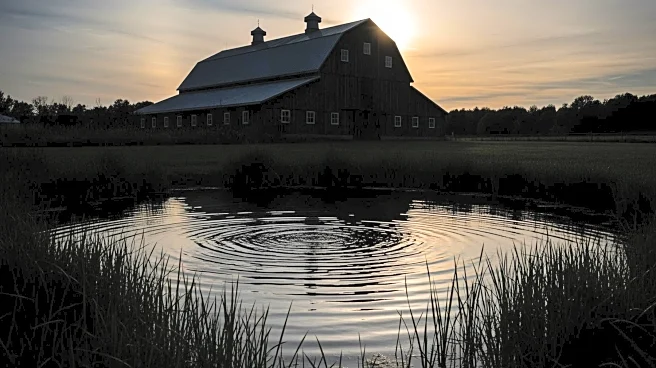
In Oregon, the regulation of Confined Animal Feeding Operations (CAFOs) is under scrutiny as debates arise over the use of the term 'factory farm.' Oregon's CAFOs are regulated based on animal numbers, site conditions, and environmental risk, rather than
arbitrary notions of scale. The Oregon Department of Agriculture and Environmental Quality recently proposed the renewal of a permit governing how livestock operations manage manure and nutrients. This process is described as rigorous and grounded in science. Critics argue that terms like 'factory farm' and claims of manure being 'dumped' are rhetorical and obscure the reality of how Oregon's livestock producers are regulated. The commentary emphasizes that these farms, regardless of size, operate under stringent environmental regulations and contribute significantly to the food supply.
Why It's Important?
The debate over the terminology and regulation of CAFOs in Oregon is significant as it impacts public perception and policy-making in agriculture. The use of charged language can influence public discourse and potentially lead to policy changes that may not align with scientific and regulatory realities. Oregon's approach to regulating CAFOs reflects a balance between environmental protection and agricultural productivity, which is crucial for sustaining the state's agricultural economy. The outcome of this debate could affect how agricultural operations are perceived and regulated, potentially influencing similar discussions in other states.