








What's Happening?
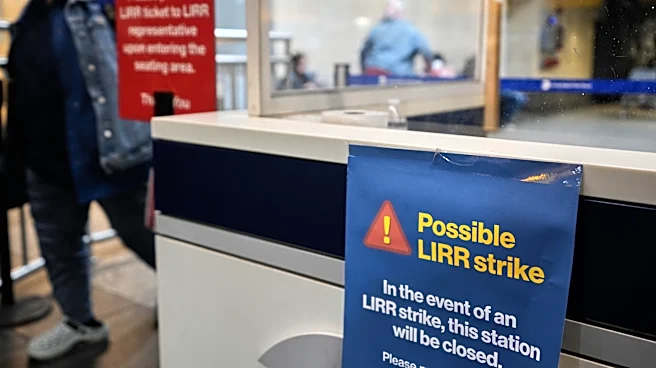
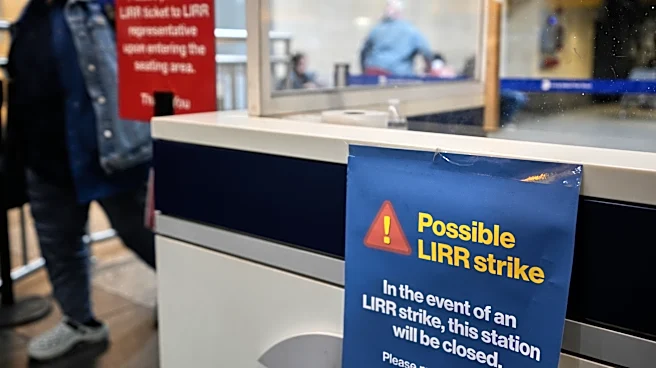
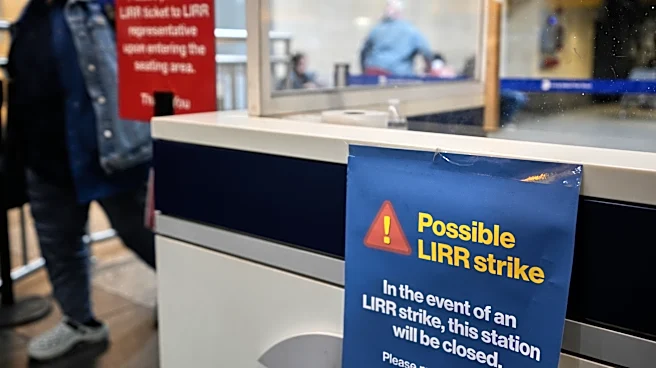
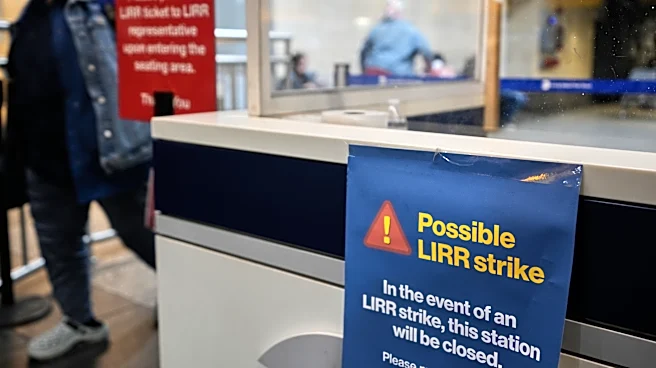
The Metropolitan Transportation Authority (MTA) and the unions representing Long Island Rail Road (LIRR) workers have failed to reach an agreement on the fourth year of a new contract. This impasse has resulted in the first work stoppage for the LIRR since
1994. The strike began after negotiations broke down late Friday, affecting thousands of commuters who rely on the LIRR for transportation. The disagreement centers around contract terms that have been under negotiation for some time, with both sides unable to reconcile differences over wages, benefits, and working conditions. The strike is expected to cause significant disruptions in the New York metropolitan area, particularly for those commuting from Long Island to New York City.
Why It's Important?
The LIRR strike is significant as it highlights ongoing labor disputes within major transportation networks, which can have widespread implications for daily commuters and the regional economy. The LIRR is a critical component of the New York metropolitan area's transportation infrastructure, serving as a primary mode of transit for many residents. The strike not only disrupts daily commutes but also impacts businesses that depend on the flow of workers and customers. Additionally, the strike underscores the challenges faced by public transportation systems in negotiating labor contracts that balance the needs of workers with budgetary constraints. The outcome of this strike could set a precedent for future labor negotiations within the MTA and other transit authorities.
What's Next?
As the strike continues, both the MTA and union representatives are likely to return to the negotiating table in an effort to resolve the dispute. The pressure to reach an agreement will intensify as the strike's impact on commuters and the economy becomes more pronounced. Political leaders and stakeholders may become involved to facilitate a resolution, given the potential for prolonged disruptions. In the meantime, commuters will need to seek alternative transportation options, which could include increased use of buses, carpooling, or telecommuting. The resolution of this strike will be closely watched by other transit systems facing similar labor challenges.