





What's Happening?
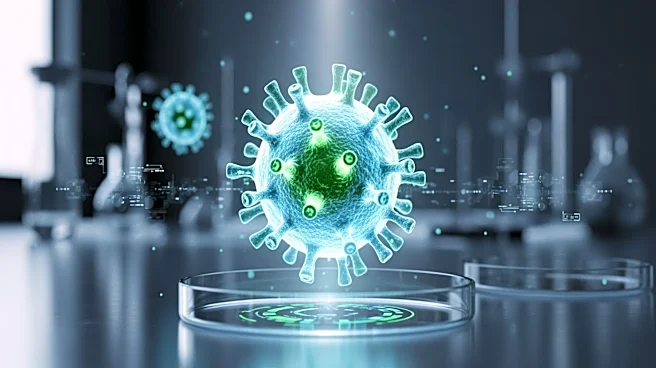
Researchers at the Japan Advanced Institute of Science and Technology have discovered a bacterium, Ewingella americana, that can completely eradicate tumors in mice with a single dose. The bacterium, isolated from the intestines of Japanese tree frogs,
targets cancer cells by accumulating in low-oxygen tumor environments and triggering immune responses. In experiments, the bacterium achieved a 100% complete response rate in a mouse model of colorectal cancer, outperforming traditional cancer therapies. The study highlights the potential of using naturally occurring bacteria as a novel cancer treatment strategy.
Why It's Important?
This discovery could revolutionize cancer treatment by providing a new, highly effective method to target and eliminate tumors. The use of bacteria offers a unique approach that combines direct cytotoxic effects with immune activation, potentially leading to more effective and less toxic cancer therapies. If successful in human trials, this method could provide an alternative for patients who do not respond well to existing treatments. The research also emphasizes the untapped potential of biodiversity in developing new medical technologies.
What's Next?
Future research will focus on testing the bacterium's effectiveness against other types of cancer, such as breast and pancreatic cancer. Researchers will also work on improving delivery methods and exploring combination therapies with existing treatments. The findings may lead to clinical trials to assess the safety and efficacy of this approach in humans. The study opens new avenues for exploring the role of gut microbiota in cancer treatment and the development of innovative therapies.