
What's Happening?
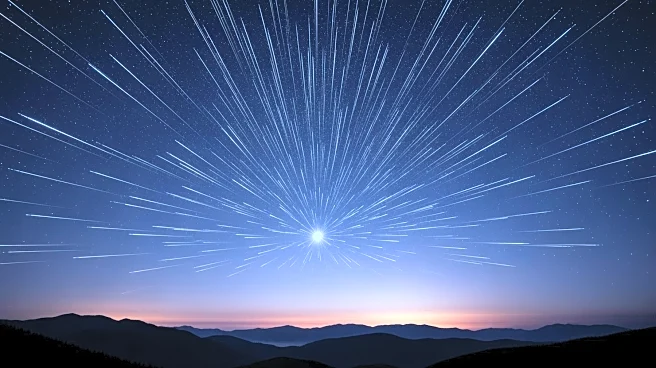
The Geminid meteor shower, one of the most anticipated celestial events of the year, is reaching its peak this weekend. Skywatchers can expect to see a stunning display of shooting stars, with the best
viewing times being from after midnight until before dawn. The meteors appear to radiate from the Gemini constellation, which rises higher in the sky as the night progresses. This annual event occurs as Earth passes through the debris stream left by asteroid 3200 Phaethon, resulting in a high number of meteors entering the atmosphere. During peak hours, viewers may see up to 150 meteors per hour if the sky is clear.
Why It's Important?
The Geminid meteor shower is significant as it provides a unique opportunity for both amateur and professional astronomers to observe and study meteors. This event is particularly notable for its bright and fast meteors, which are visible even in areas with some light pollution. The shower's timing, coinciding with the winter solstice, offers dark skies ideal for observation. For the general public, it is a chance to engage with astronomy and appreciate the natural wonders of the night sky, fostering interest in science and space exploration.
What's Next?
As the Geminid meteor shower continues, enthusiasts are encouraged to find locations with minimal light pollution for the best viewing experience. Experts suggest allowing at least 30 minutes for eyes to adjust to the darkness. The event serves as a reminder of the ongoing need for public education and outreach in astronomy, potentially inspiring future generations of scientists and space explorers.