
What's Happening?
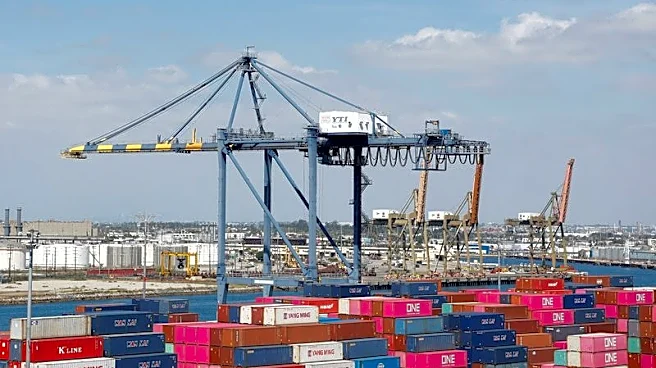
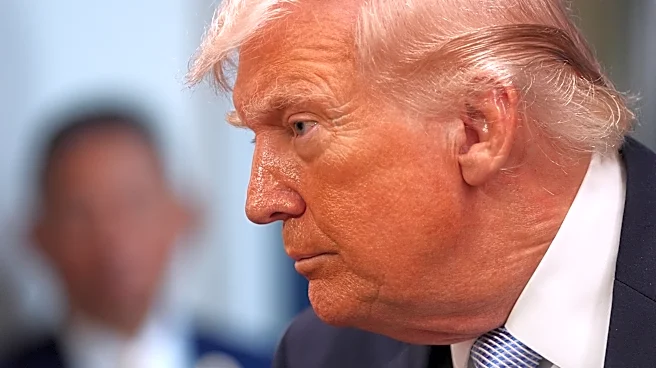
A legal scholar, Ilya Somin, has raised concerns over President Trump's recent imposition of a new set of 10% global tariffs, which are currently being challenged in court. These tariffs were introduced
after the U.S. Supreme Court struck down a previous set of tariffs. President Trump is citing Section 122 of the Trade Act of 1974 as the legal basis for these tariffs, which allows for up to 15% tariffs under specific circumstances. However, Somin argues that the conditions required by this section do not exist in the current economic environment, making the tariffs legally questionable. He contends that the president's interpretation of the law grants him excessive power to impose tariffs, which should constitutionally reside with Congress. This legal challenge highlights the ongoing debate over the extent of executive power in trade policy.
Why It's Important?
The challenge to President Trump's tariffs underscores a significant constitutional debate about the separation of powers between the executive and legislative branches. If the courts uphold the tariffs, it could set a precedent for expanded executive authority in trade matters, potentially allowing future presidents to impose tariffs unilaterally. This could disrupt the stable business environment that investors and businesses rely on, as tariffs can affect international trade relations and economic stability. Conversely, if the challenge succeeds, it may reinforce congressional authority over trade policy, ensuring that such decisions require legislative approval. This case could have far-reaching implications for U.S. trade policy and the balance of power within the federal government.
What's Next?
The legal challenge to the tariffs is expected to proceed through the court system, with the possibility of reaching the Supreme Court if appealed. The outcome of this case could influence future trade policies and the extent of presidential power in economic matters. Stakeholders, including businesses and trade partners, will be closely monitoring the proceedings, as the decision could impact international trade dynamics and economic strategies. Additionally, Congress may consider revisiting trade legislation to clarify the scope of executive authority in imposing tariffs, potentially leading to new legislative measures.