






What's Happening?
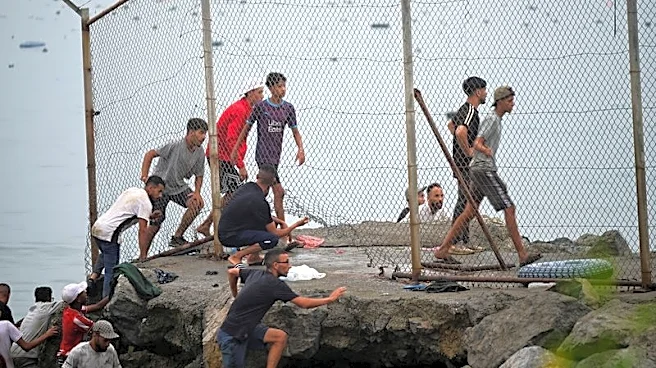
The Trump administration has criticized Spain's handling of a migration crisis in the Spanish exclave of Ceuta, using it as a justification for its own stringent immigration policies. President Trump, in a Fox News interview, highlighted images of Moroccan
youths entering Ceuta as a warning of what could happen in the U.S. if Democrats gain power. The administration has been known for its hardline stance on immigration, deploying ICE and USBP agents to conduct raids and mass deportations. Since January 2025, over 622,000 undocumented immigrants have been expelled. The administration's policies have faced backlash, including incidents where ICE agents have shot and killed individuals, leading to public outrage and the resignation of DHS Secretary Kristi Noem. Despite criticism, the administration continues to defend its approach, with Vice President JD Vance and other officials using Spain's situation to argue against what they describe as 'radical left-wing globalist policies.'
Why It's Important?
The Trump administration's response to the Ceuta migration crisis underscores the ongoing debate over immigration policy in the U.S. The administration's use of international events to bolster domestic policy arguments highlights the political stakes involved, especially with upcoming midterm elections. The hardline immigration policies have significant implications for U.S. society, affecting millions of undocumented immigrants and sparking national debates on human rights and law enforcement practices. The administration's stance may influence voter sentiment, particularly among those concerned about border security and immigration control. Conversely, it may galvanize opposition from those advocating for more humane immigration policies. The situation also reflects broader geopolitical dynamics, as U.S. immigration policy is positioned in contrast to European approaches, potentially affecting international relations.
What's Next?
As the midterm elections approach, the Trump administration is likely to continue using immigration as a key campaign issue. The administration may intensify its rhetoric and actions to appeal to its base, emphasizing border security and the perceived threats of mass migration. Political leaders and civil society groups opposing the administration's policies may increase their advocacy efforts, highlighting the human cost of current practices and pushing for legislative changes. The outcome of the elections could significantly impact the future direction of U.S. immigration policy, determining whether the current hardline approach is maintained or if a shift towards more lenient policies occurs.