



What's Happening?
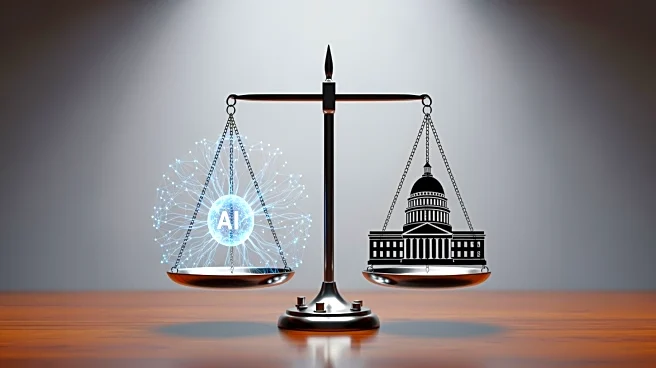
The Trump administration has released a new policy framework for regulating generative AI, emphasizing federal control over AI industry rules. The framework, introduced by Sen. Marsha Blackburn as The Trump America AI Act, aims to prevent states from
imposing their own regulations, arguing that a unified federal approach is necessary for the U.S. to lead globally in AI. The plan addresses issues like job loss, copyright concerns, and infrastructure development but has been criticized for not adequately protecting consumer privacy and failing to establish a new governing body for AI oversight. The framework suggests using existing agencies for regulation and highlights the need for protecting children from AI-related harms.
Why It's Important?
This policy framework is crucial as it seeks to centralize AI regulation at the federal level, potentially simplifying compliance for AI companies operating across multiple states. However, the plan's perceived shortcomings in consumer protection and privacy could lead to significant pushback from advocacy groups and state governments. The framework's focus on promoting AI development aligns with industry interests but may not address broader societal concerns about AI's impact on jobs and privacy. The proposal's success will depend on its ability to balance innovation with adequate safeguards for consumers and workers.
What's Next?
The framework's future hinges on Congressional approval, as it currently lacks legislative authority. The proposal's reception in Congress will determine whether it becomes law, with potential amendments to address privacy and consumer protection concerns. The ongoing debate over state versus federal regulatory authority will likely continue, influencing the framework's implementation and effectiveness. Additionally, the framework's impact on AI infrastructure development and job displacement will be closely monitored by stakeholders.