



What's Happening?
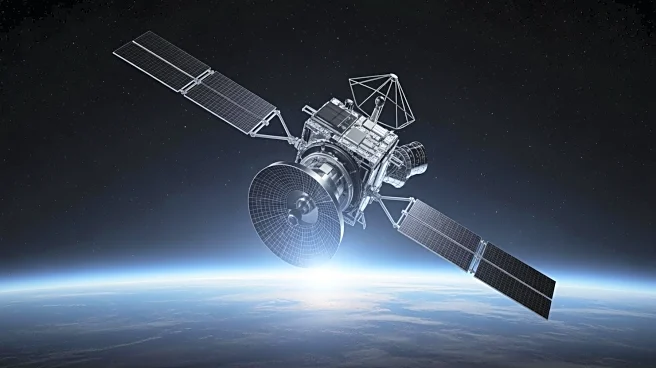
The European Space Agency (ESA) has launched two satellites as part of its Celeste mission, aimed at demonstrating advanced navigation and timing capabilities through a constellation of microsatellites. The launch took place from New Zealand, marking
the beginning of the early operations phase for the satellites. The IOD-2 satellite, built by Thales Alenia Space, is a CubeSat designed to validate system definitions and enable early signal transmission. The mission seeks to enhance the resilience and performance of navigation systems in challenging environments, such as urban canyons and polar regions, and improve synchronization of terrestrial 5G/6G networks.
Why It's Important?
The Celeste mission represents a significant advancement in satellite navigation technology, potentially offering centimeter-level positioning accuracy and enhanced resistance to jamming and spoofing. This could lead to new applications in autonomous vehicles, IoT, and unmanned systems, providing continuous coverage in dense urban areas. The mission's success could pave the way for next-generation applications requiring robust and high-performance navigation systems, creating new opportunities in export markets and enhancing the capabilities of existing systems like Galileo.
What's Next?
The Celeste mission is currently in its in-orbit demonstration phase, with plans to expand the constellation to 11 microsatellites. Future launches will test innovative signals across multiple frequency bands and demonstrate new service capabilities. ESA will assess how a low Earth orbit navigation layer can operate alongside medium Earth orbit systems, potentially leading to broader adoption and integration of these technologies in various sectors.