




What's Happening?
An investigation by Unearthed and Public Eye has revealed that Brazilian health services recorded at least 1,600 suspected or confirmed pesticide poisoning cases last year involving products from European or British manufacturers. These incidents included
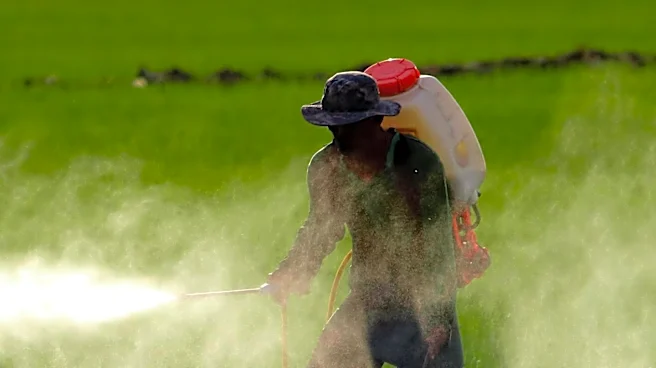
32 fatalities and 47 cases involving children under the age of six. Farmworkers in Brazil reported symptoms such as vomiting, breathing difficulties, and severe burns after exposure to these pesticides. Approximately one-third of the cases involving European company products were for pesticides banned for agricultural use in the European Union. Nilto Tatto, a Brazilian congressman, criticized these corporations for lobbying to maintain the use of these pesticides in the Global South, describing it as 'neo-colonialism.' Ivan Castoldi, whose father died after ingesting the weedkiller Reglone, highlighted that the product is banned in the UK but manufactured there by Syngenta for export to countries like Brazil. Brazil is the world's largest pesticide market, leading to a high number of poisonings. The investigation analyzed 2,857 reports from a Brazilian health ministry database, with over half—1,605 cases—involving brands sold by major German manufacturers Bayer or BASF, or Swiss-headquartered Syngenta. Many poisoning cases in Brazil go unreported, and a significant number of reports lack sufficient information to identify specific brands or manufacturers, suggesting the actual scale of exposure is understated.
Why It's Important?
This report highlights a critical issue of environmental justice and public health, particularly concerning the double standards in pesticide regulation and export practices by European and British companies. The continued sale and use of pesticides banned in their countries of origin in nations like Brazil raise significant ethical questions about corporate responsibility and the protection of vulnerable populations. For U.S. industries, while the immediate focus is on European and British manufacturers, this situation could prompt increased scrutiny of pesticide export policies and practices by U.S.-based companies. It may also fuel calls for more stringent international regulations on hazardous chemicals, potentially impacting the global agricultural supply chain and trade agreements. Public policy debates in the U.S. could be influenced by these findings, leading to discussions about the export of domestically banned substances and the potential for similar health crises in other developing nations. The economic implications for pesticide manufacturers could include reputational damage, legal challenges, and pressure from investors and consumers to adopt more uniform and responsible product stewardship globally. This situation underscores the broader challenge of balancing agricultural productivity with public health and environmental safety in a globalized economy.
What's Next?
The findings of this investigation are likely to intensify calls for stricter international regulations on pesticide manufacturing and export. Brazilian authorities may face increased pressure to review and potentially revise their pesticide import and usage policies, especially concerning products banned in their countries of origin. European and British governments could face demands from civil society organizations and international bodies to implement policies preventing the export of pesticides deemed too hazardous for domestic use. This could lead to legislative proposals aimed at closing regulatory loopholes that allow such exports. Pesticide manufacturers, particularly those named in the report like Bayer, BASF, and Syngenta, may face heightened public scrutiny, consumer boycotts, and potential legal actions from affected communities or advocacy groups. They might also be compelled to invest more in safer alternatives or to adopt more transparent and ethical global sales practices. Furthermore, the issue could become a point of discussion in international trade negotiations, with an emphasis on incorporating stronger environmental and health standards. The ongoing debate will likely involve a complex interplay between economic interests, public health concerns, and environmental protection, potentially leading to a re-evaluation of global agricultural practices and chemical management.
Beyond the Headlines
The issue extends beyond immediate health impacts, touching upon deeper ethical and socio-economic dimensions. The practice of exporting banned pesticides to developing nations highlights a form of 'toxic colonialism,' where environmental and health burdens are disproportionately shifted to countries with weaker regulatory frameworks and greater economic vulnerabilities. This raises fundamental questions about global equity and the responsibility of developed nations and multinational corporations towards global public health. Culturally, it can perpetuate a narrative of exploitation, undermining trust between nations and fostering resentment. Legally, it could pave the way for international lawsuits and human rights claims against companies and even governments that facilitate such exports. The long-term implications include potential damage to biodiversity, contamination of food chains, and chronic health issues for agricultural workers and their communities, leading to increased healthcare costs and reduced productivity. This situation also underscores the need for greater transparency in chemical supply chains and for international cooperation to establish universal standards for hazardous substances, ensuring that no country becomes a dumping ground for chemicals deemed unsafe elsewhere. The development could also catalyze a shift towards more sustainable and organic farming practices globally, driven by consumer demand and ethical considerations.