






What's Happening?
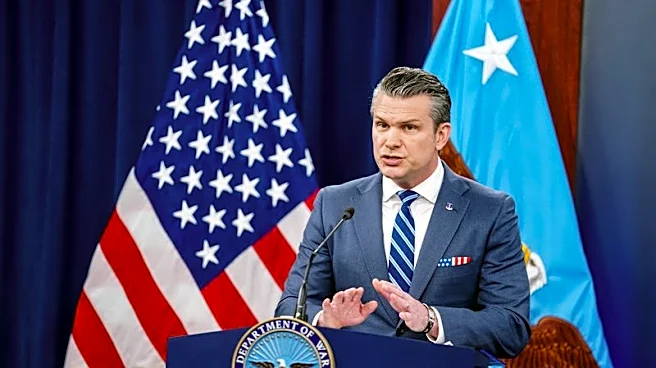
Defense Secretary Pete Hegseth recently led a prayer at a Pentagon worship service that has sparked significant controversy. During the service, Hegseth quoted a monologue from the film 'Pulp Fiction,' mistaking it for a biblical verse. The monologue,
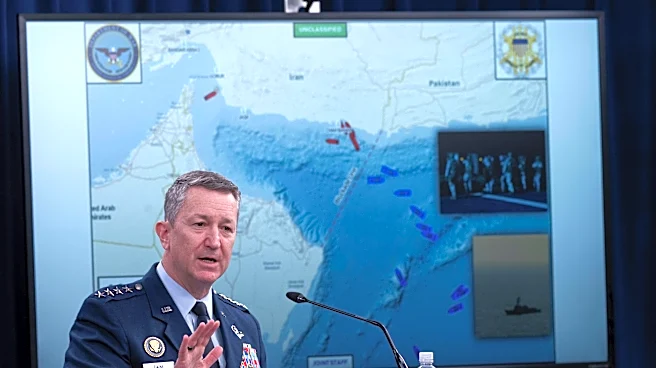
delivered by Samuel L. Jackson's character in the film, was presented by Hegseth as a prayer, which he claimed was recited by a Combat Search and Rescue team during a mission in Iran. The quote, which closely resembles Ezekiel 25:17, was actually a creation of the film's writers and not a part of any biblical text. This incident has drawn widespread attention and criticism, particularly from those who recognized the pop culture reference.
Why It's Important?
The incident highlights the potential pitfalls of blending pop culture with religious and military contexts, especially in official settings like the Pentagon. It raises questions about the appropriateness of using fictional narratives in serious religious or military discourse. The event has also sparked discussions about the use of religious language in political and military rhetoric, with critics arguing that it reflects a broader trend of invoking Christianity for political purposes without a deep understanding of theology. This could have implications for how religious and cultural references are used in government communications and the potential for misinterpretation or misuse.
What's Next?
The controversy may lead to increased scrutiny of how religious language is used in official government settings. It could prompt discussions within the Department of Defense and other government agencies about the importance of verifying the sources of religious or cultural references before they are used in public or official communications. Additionally, the incident may fuel ongoing debates about the separation of church and state and the role of religion in government and military affairs.