
What's Happening?
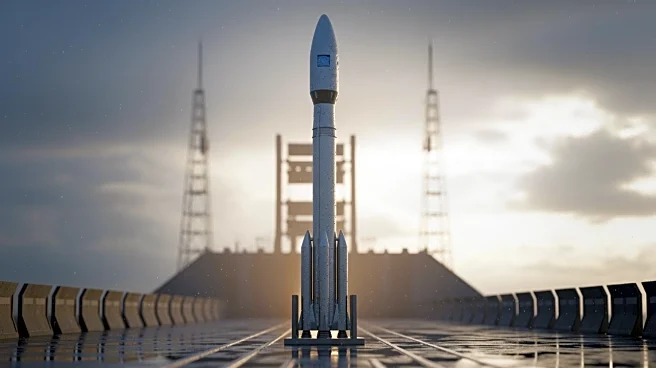
United Launch Alliance (ULA) is set to launch its Vulcan rocket on a mission for the United States Space Force (USSF). Scheduled for a predawn liftoff from Cape Canaveral Space Force Station, the mission,
designated USSF-87, involves deploying multiple satellites, although the exact number has not been disclosed. This mission marks ULA's second national security mission using the Vulcan rocket and is expected to be the company's longest mission to date, lasting approximately 10 hours. The primary payload is the Geosynchronous Space Situational Awareness Program (GSSAP) system, which is designed to enhance the U.S. Space Command's monitoring capabilities in geostationary Earth orbit. The launch will utilize a VC4S configuration, featuring four solid rocket boosters and a standard payload fairing.
Why It's Important?
The launch of the Vulcan rocket is significant for several reasons. It underscores ULA's role in supporting U.S. national security through space-based surveillance capabilities. The GSSAP system enhances the U.S. military's ability to monitor and protect its assets in geostationary orbit, a critical region for communication and surveillance satellites. This mission also highlights the ongoing collaboration between ULA and the U.S. Space Force, reflecting the strategic importance of space in national defense. The successful deployment of these satellites could improve the U.S.'s situational awareness and response capabilities in space, potentially deterring adversarial actions and ensuring the security of space-based infrastructure.
What's Next?
Following the launch, the focus will shift to the deployment and operational integration of the GSSAP satellites. The U.S. Space Force will likely conduct tests and evaluations to ensure the satellites are functioning as intended. Additionally, the mission includes research and development systems aimed at refining on-orbit maneuvers and enhancing satellite resiliency. These efforts will contribute to the development of advanced tactics and technologies for space operations. The success of this mission could pave the way for future launches and collaborations between ULA and the U.S. military, further solidifying the role of commercial space companies in national defense.