





What's Happening?
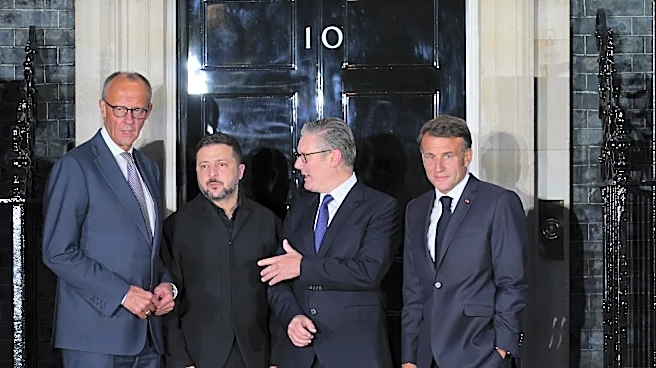
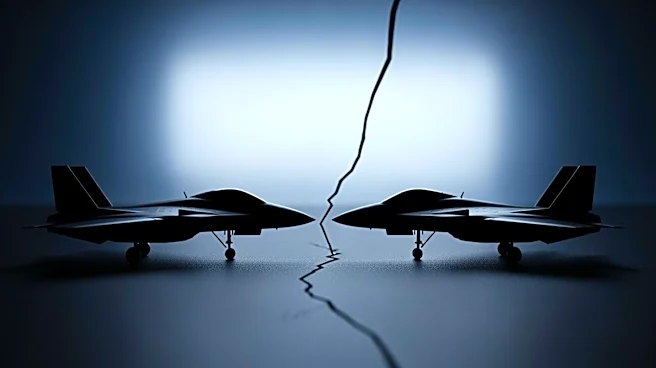
Germany and France have decided to abandon their collaborative effort to develop a new-generation fighter jet, known as the Future Combat Air System (FCAS). This decision was reached after German Chancellor Friedrich Merz and French President Emmanuel
Macron concluded that the project, which was initiated in 2017, could not overcome persistent disagreements. The project aimed to replace France's Rafale jets and the Eurofighter used by Germany and Spain by 2040. However, disputes over leadership, control, and technological specifications between the involved companies, Dassault Aviation and Airbus, have stalled progress. The project also faced challenges due to differing national requirements, with France needing a nuclear-capable jet that could land on aircraft carriers, unlike Germany.
Why It's Important?
The termination of the FCAS project represents a significant setback for European defense collaboration efforts. The project was a cornerstone of Europe's strategy to enhance its military capabilities independently of the United States. The inability to reach an agreement highlights the complexities of multinational defense projects, where national interests and industrial competition can impede progress. This development may impact Europe's ability to respond to security challenges, particularly in the context of a resurgent Russia and evolving global threats. The decision also underscores the challenges of aligning defense priorities across EU member states, potentially affecting future collaborative defense initiatives.
What's Next?
While the core fighter jet project has been abandoned, there is potential for the continuation of other components of the FCAS, such as the 'combat cloud' and drone systems. These elements could still be developed as part of a broader European defense strategy. The decision to end the fighter jet project may prompt Germany and France to explore alternative defense collaborations or focus on national projects. Additionally, the outcome of this project could influence future defense policy discussions within the EU, as member states reassess their defense priorities and collaborative approaches.