






What's Happening?
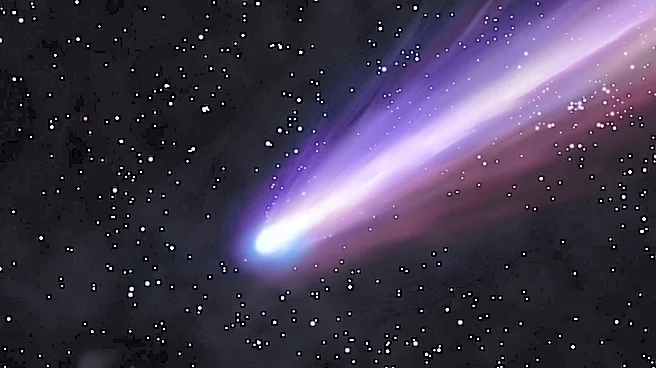
Astronomer Chris Schur captured a striking image of Comet 10P/Tempel 2's dust trail as it crossed the constellation Capricornus. Unlike a traditional comet tail, this trail consists of dust accumulated in the comet's orbit over time. The image was taken
using an 11-inch astrograph with LRGB filters, highlighting the comet's path as it approaches its August 2 perihelion. This observation adds to the understanding of cometary behavior and the solar system's dynamics.
Why It's Important?
Studying comets like Tempel 2 provides valuable insights into the early solar system's composition and the processes that shaped planetary formation. The dust trail's visibility offers a unique opportunity to analyze the material ejected from the comet, contributing to the broader understanding of cometary physics. Such observations can inform future space missions and enhance predictive models of comet behavior, which are crucial for assessing potential impacts on Earth.
What's Next?
As Comet Tempel 2 approaches its perihelion, astronomers will continue to monitor its activity, potentially capturing more detailed images and data. This ongoing observation will help refine models of cometary dynamics and improve predictions of their future paths. The findings may also guide the development of new technologies for studying and potentially mitigating the impact of comets and asteroids on Earth.
Beyond the Headlines
The study of comets extends beyond scientific inquiry, touching on cultural and historical aspects of human fascination with celestial phenomena. Comets have been observed and recorded by civilizations throughout history, often associated with significant events or omens. Modern scientific exploration of comets continues to captivate public interest, bridging the gap between ancient observations and contemporary space science.