

What's Happening?
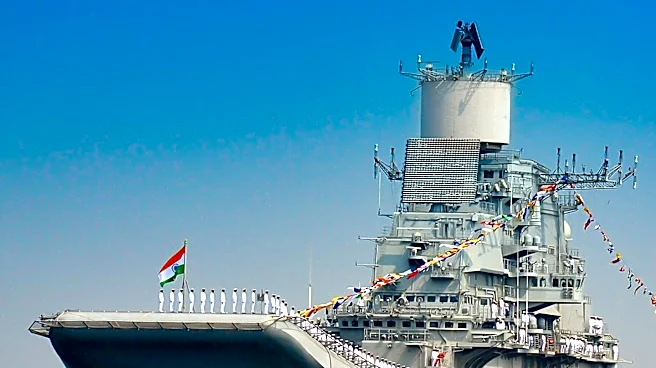
President Trump has dismissed reports regarding the deteriorating conditions on the USS Abraham Lincoln, labeling concerns about mental health and supply issues for American sailors as 'fake.' The aircraft carrier has been at sea for over 240 days, a record-setting
uninterrupted period. President Trump stated that an unnamed retired admiral assured him the Lincoln is 'beautifully maintained and beautifully taken care of.' This statement comes amidst broader discussions about the President's tendency to avoid blame and his administration's policies, including scaling back military exercises with South Korea and ongoing diplomatic efforts in the Middle East.
Why It's Important?
President Trump's dismissal of concerns about the USS Abraham Lincoln's conditions is significant because it directly impacts military morale, readiness, and public trust in leadership. The well-being of service members, especially those enduring prolonged deployments, is critical for national security. Downplaying such issues can lead to a perception that the administration is not prioritizing the welfare of its military personnel. This stance also aligns with a pattern of President Trump's administration to challenge critical reports, which can create a contentious relationship between the executive branch and media outlets. Furthermore, the extended deployment of the USS Abraham Lincoln highlights the operational demands placed on the U.S. Navy and the potential strain on resources and personnel, which has broader implications for military policy and budgeting.
What's Next?
The immediate future will likely see continued scrutiny from media and potentially Congress regarding the conditions on the USS Abraham Lincoln and the welfare of its crew. Military officials may be pressed to provide more detailed reports on the ship's status and the support systems in place for sailors. President Trump's administration may continue to defend its position, while critics will likely use these reports to question the administration's approach to military affairs. The incident could also fuel debates about military spending, deployment strategies, and the overall readiness of the U.S. armed forces. The long-term impact could include policy adjustments aimed at improving conditions for deployed service members or a reevaluation of deployment durations.
Beyond the Headlines
This situation delves into the deeper implications of leadership accountability and the communication of critical information within a democratic society. President Trump's characterization of the reports as 'fake' raises questions about the administration's approach to factual discourse and its impact on public perception of institutions like the military and the press. It also highlights the challenges faced by military personnel who may feel their concerns are not being adequately addressed by higher command. The incident could contribute to a broader narrative about the politicization of military issues and the erosion of trust in official statements. Ultimately, the well-being of service members is a non-partisan issue, and any perceived neglect can have lasting effects on recruitment, retention, and the overall health of the armed forces.