



What's Happening?
The Mitchell Institute for Aerospace Studies has released a policy paper recommending that the U.S. Air Force significantly increase its fleet of next-generation fighters and bombers to effectively counter potential threats from China. The report suggests
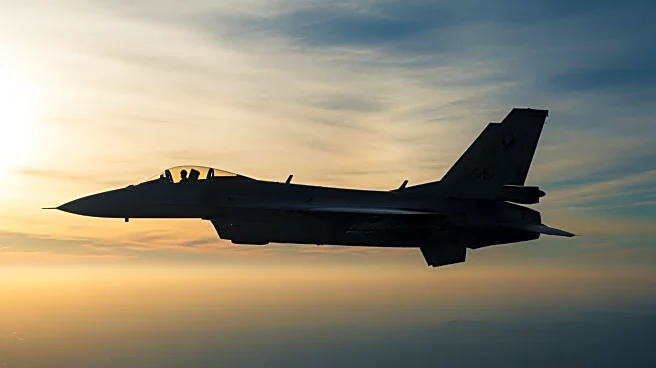
that the Air Force needs at least 300 F-47 fighters and 200 B-21 Raider stealth bombers, exceeding current procurement plans. The Air Force has indicated plans to acquire 185 F-47s and 100 B-21s. Heather Penney, a former F-16 pilot and director of research at the Mitchell Institute, emphasized the importance of maintaining a robust combat fleet capable of long-range air power projection. The report also advises against retiring legacy bombers like the B-1 Lancer and B-2 until sufficient numbers of B-21s are operational. Additionally, the Air Force is encouraged to increase procurement of F-35A Joint Strike Fighters and F-15EX Eagle IIs, along with autonomous drone wingmen, to address current and future challenges.
Why It's Important?
The recommendations from the Mitchell Institute highlight the strategic necessity for the U.S. to maintain air superiority in the face of growing military capabilities from China. The call for an expanded fleet underscores concerns about the U.S. Air Force's ability to project power and deter aggression in the Pacific region. The potential inability to hold Chinese targets at risk could embolden adversaries and undermine U.S. deterrence strategies. The report's emphasis on not retiring older aircraft until new models are fully operational reflects a need to maintain readiness and avoid capability gaps. This has significant implications for U.S. defense policy and budget allocations, as it suggests a shift from the 'divest to invest' strategy towards a more immediate focus on force readiness and expansion.
What's Next?
The report's recommendations may prompt discussions within Congress and the Pentagon regarding defense budget allocations and procurement strategies. If adopted, these recommendations could lead to increased funding for the Air Force to accelerate the acquisition of new aircraft and maintain existing fleets. The potential expansion of the Air Force's capabilities could also influence U.S. foreign policy and military posture in the Asia-Pacific region. Stakeholders, including defense contractors and military strategists, will likely engage in debates over the feasibility and strategic necessity of the proposed fleet expansion.