



What's Happening?
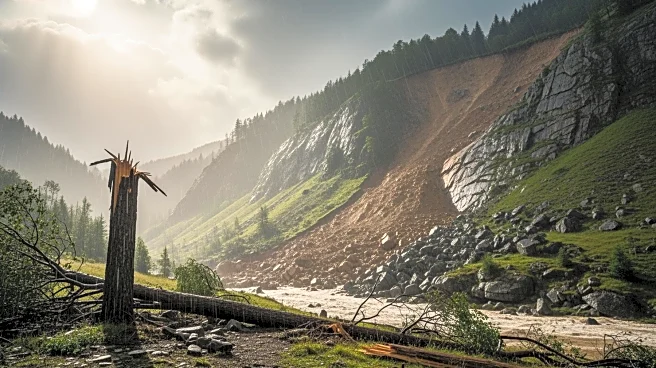
New Zealand's North Island has been struck by deadly landslides following heavy rainfall, resulting in the deaths of two individuals and several others feared missing. The landslides occurred in Welcome Bay and a popular campground on Mount Maunganui,
an extinct volcano and sacred Māori site. Rescue operations are ongoing, with authorities expressing concerns over the high-risk environment. The severe weather has led to flooding and power outages, with some areas experiencing record rainfall. A state of emergency has been declared in the Bay of Plenty and other affected regions.
Why It's Important?
The landslides highlight the vulnerability of New Zealand's infrastructure and communities to extreme weather events, which are becoming more frequent and severe. The impact on local communities is profound, with significant disruptions to daily life and potential long-term economic consequences. The situation underscores the need for improved disaster preparedness and response strategies. Additionally, the cultural significance of Mount Maunganui adds a layer of complexity to the recovery efforts, as it is a revered site for the Māori people.
What's Next?
Rescue efforts will continue as authorities work to locate missing individuals and provide aid to affected communities. The government may need to reassess its disaster management policies and infrastructure resilience in light of the increasing frequency of such events. There is also likely to be a focus on supporting the recovery of local economies and addressing the psychological impact on residents. The situation may prompt discussions on climate change adaptation and mitigation strategies to better protect vulnerable regions.
Beyond the Headlines
The landslides in New Zealand serve as a stark reminder of the broader implications of climate change, as extreme weather events become more common globally. The cultural and historical significance of affected sites like Mount Maunganui highlights the intersection of environmental and cultural preservation challenges. This event may lead to increased advocacy for sustainable development practices and greater investment in climate resilience initiatives.