


What's Happening?
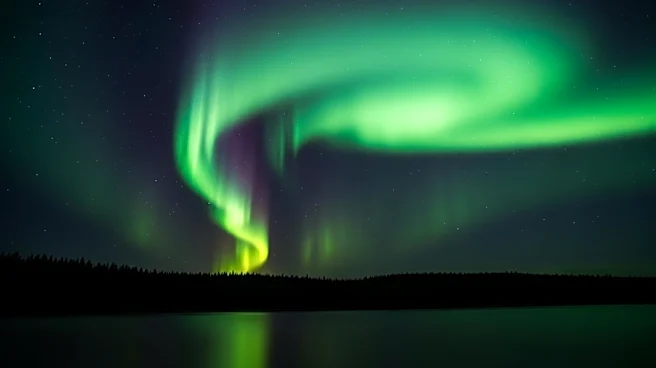
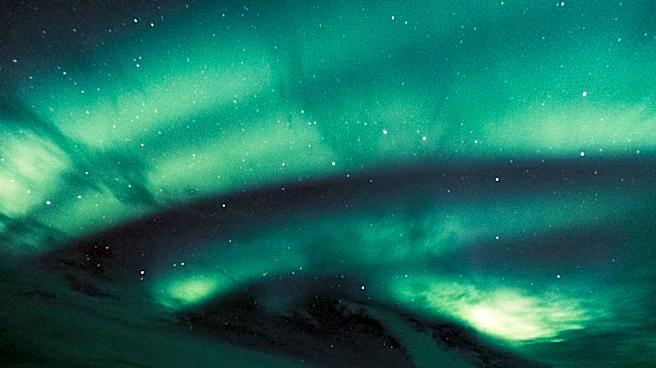
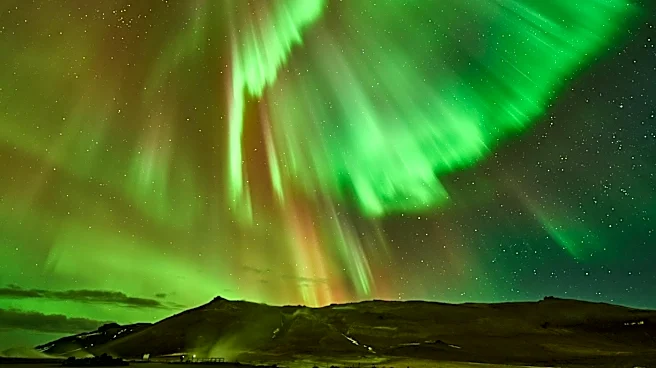
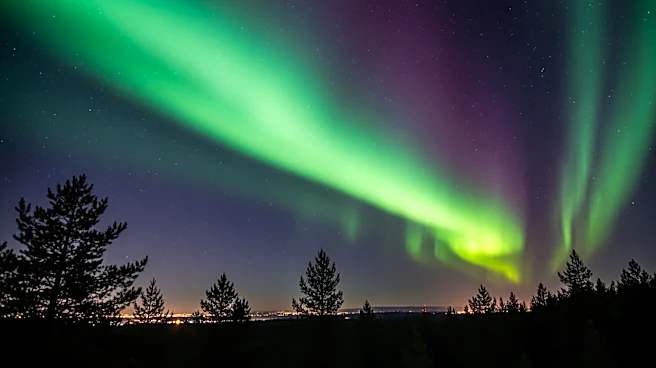
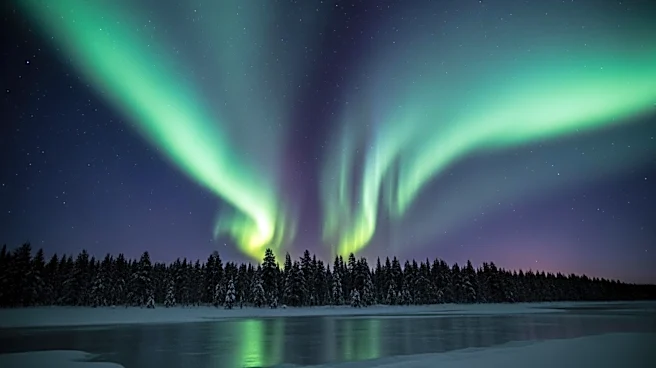
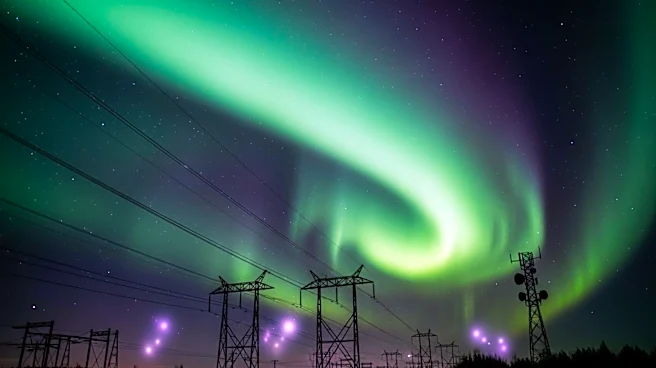
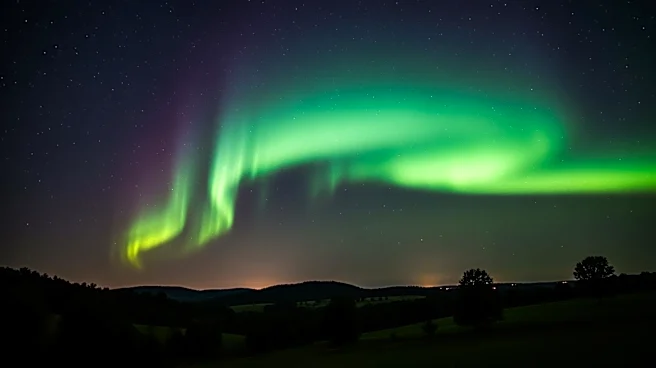
The National Oceanic and Atmospheric Administration (NOAA) has indicated that the northern lights, or aurora borealis, may be visible tonight in high-latitude regions such as northern Canada and Alaska. This natural light display is caused by geomagnetic
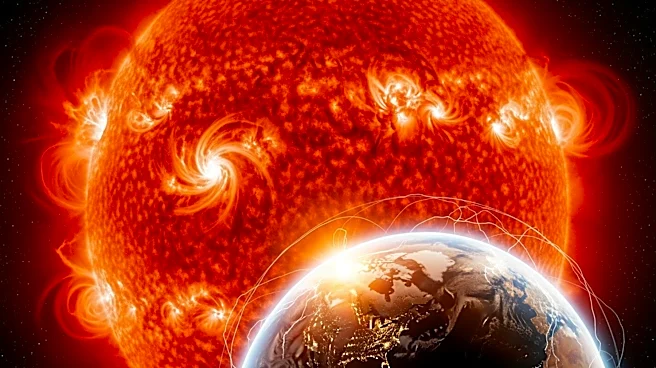
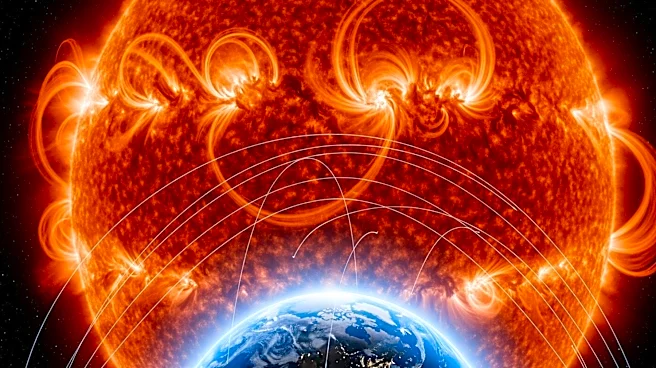
storms, which occur when charged particles from the sun interact with gases in the Earth's atmosphere. The visibility of the auroras depends on several factors, including the intensity of the geomagnetic activity and the location of the observer. Currently, streams of enhanced solar wind are interacting with Earth's magnetic field, creating the potential for auroral activity. However, the lingering summer twilight and shorter nights in these regions pose a challenge for spotting the auroras, as extended daylight can obscure the view.
Why It's Important?
The potential visibility of the northern lights is significant for both scientific and cultural reasons. Scientifically, observing the auroras can provide valuable data on solar activity and its effects on Earth's magnetic field. This information is crucial for understanding space weather and its impact on satellite operations, communication systems, and power grids. Culturally, the northern lights are a source of wonder and inspiration, attracting tourists and skywatchers to regions where they are visible. This can have economic benefits for local communities in northern Canada and Alaska, as increased tourism can boost local businesses and services. Additionally, the event highlights the importance of preserving dark skies, free from light pollution, to fully appreciate such natural phenomena.
What's Next?
For those interested in observing the northern lights, NOAA recommends heading to dark locations away from city lights to increase the chances of a clear view. Real-time aurora forecasts and space-weather apps can help track solar wind and magnetic field changes, providing updates on the likelihood of auroral activity. As geomagnetic conditions are expected to range from unsettled to occasionally active, skywatchers in northern regions should remain vigilant for potential auroral displays. The best viewing times are during the darkest overnight hours after sunset and before dawn. Continued monitoring of space weather conditions will be essential for predicting future auroral events and understanding their broader implications.