



What's Happening?
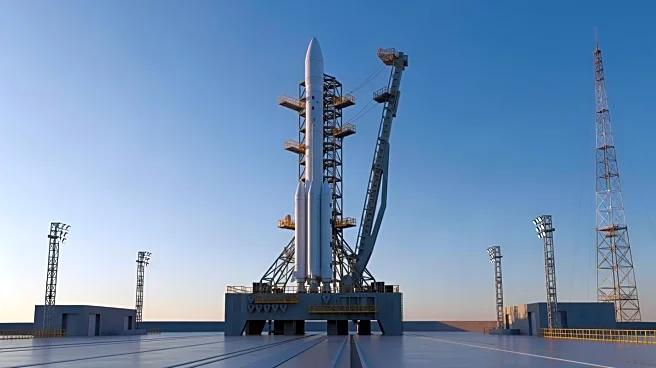
NASA has announced a revised schedule for the rollout of the Artemis II rocket, which is now set for no earlier than March 20, 2026. The Artemis II mission involves the Space Launch System (SLS) rocket and the Orion spacecraft, which are currently housed
in the Vehicle Assembly Building at NASA's Kennedy Space Center in Florida. The delay was necessitated by the need to troubleshoot the helium flow to the rocket's upper stage and replace an electrical harness for the flight termination system on the core stage. Once these issues are resolved, the SLS rocket will be transported to Launch Complex 39B in preparation for a test flight that will send four astronauts around the Moon and back. The rollout process, which takes up to 12 hours, will be streamed live by NASA.
Why It's Important?
The Artemis II mission is a critical step in NASA's broader Artemis program, which aims to return humans to the Moon and eventually establish a sustainable presence there. Successfully launching Artemis II will demonstrate the capabilities of the SLS rocket and Orion spacecraft, paving the way for future missions, including Artemis III, which plans to land astronauts on the lunar surface. The mission's success is vital for maintaining the timeline of NASA's lunar exploration goals and for the U.S. to assert its leadership in space exploration. The technical adjustments and careful planning underscore the complexity and challenges of space missions, highlighting the importance of precision and safety in advancing human spaceflight.
What's Next?
Following the rollout, NASA will continue preparations for the Artemis II launch, targeting an April 1, 2026, launch window. The agency will monitor weather conditions closely, as they could impact the schedule. The successful completion of the Artemis II mission will set the stage for subsequent missions, including Artemis III, which aims to land astronauts on the Moon. NASA's continued progress in the Artemis program will likely influence international collaborations and partnerships in space exploration, as well as inspire technological advancements and innovations.