






What's Happening?
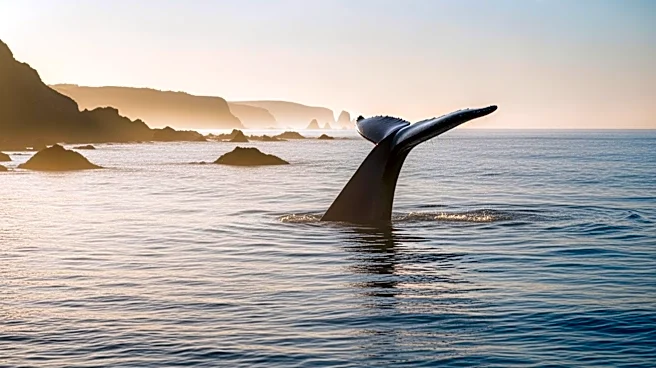
A group of wealthy individuals in Germany have come together to fund a rescue operation for a stranded humpback whale, nicknamed 'Timmy', off the northern coast of the country. The whale, weighing 12 tonnes, was first spotted in the Baltic Sea near Timmendorfer
Strand in early March, far from its natural habitat. Despite several rescue attempts, Timmy remains trapped in shallow waters and is in a weakened state. Sea Shepherd Germany, a marine conservation organization, has noted that the whale's chances of survival are slim. The rescue plan involves using air cushions to float the whale back to the surface, allowing it to be pulled into deeper waters and eventually back to the Atlantic Ocean. This effort is financially supported by two multimillionaires, including Walter Gunz, founder of an electronics retail chain. The operation, dubbed 'Operation Cushion', has been approved by state officials and aims to transport the whale back to the North Sea.
Why It's Important?
The rescue operation highlights the intersection of environmental conservation and private funding. The involvement of wealthy individuals underscores the potential for private sector contributions to environmental causes, especially in urgent situations where government resources may be limited. The effort to save Timmy also brings attention to the broader issue of marine life conservation and the challenges faced by animals that stray from their natural habitats. The situation has sparked a debate on the effectiveness and risks of such rescue missions, with organizations like Greenpeace expressing concerns about the potential for injury to the whale. This event may influence future policies and strategies regarding marine animal rescue operations and the role of private funding in environmental conservation.
What's Next?
If the current rescue plan is successful, Timmy will be transported back to the North Sea and potentially further into the Atlantic Ocean. The outcome of this operation could set a precedent for future rescue missions involving marine animals. It may also prompt discussions among environmental groups, policymakers, and private donors about the best practices for such interventions. The situation is being closely monitored by media outlets, and any developments could influence public opinion and policy regarding marine conservation efforts.