



What's Happening?
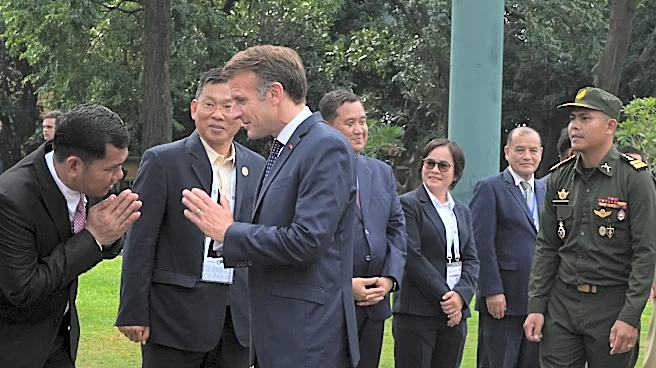
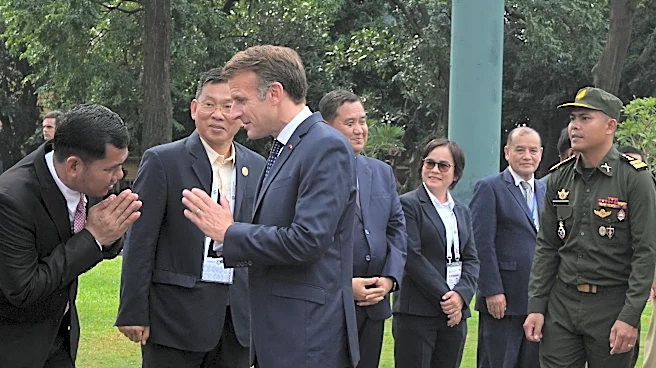
Malaysia and France have signed a Memorandum of Understanding (MoU) to collaborate on advancing Malaysia's critical minerals industry. This agreement marks Malaysia's first such partnership with a European nation, aiming to build an integrated, higher-value
mineral industry through research, development, and industrial cooperation. The Ministry of Foreign Affairs Malaysia reported on X that the deal followed bilateral discussions between Prime Minister Anwar Ibrahim and French President Emmanuel Macron on November 17. This partnership is part of a broader global effort by major economies to diversify critical mineral supply chains and reduce reliance on China, which currently dominates rare earth processing. French companies have already shown interest in Malaysian downstream projects, with Carester planning a rare earths separation plant in Perak alongside local partner Malaco Mining Group. Beyond minerals, the two nations also signed agreements on energy transition and defense, including the purchase of search-and-rescue combat helicopters from Airbus.
Why It's Important?
This collaboration is strategically significant for the U.S. and its allies as it contributes to the diversification of critical mineral supply chains, a key objective for national security and economic stability. Reducing reliance on a single dominant supplier, such as China, mitigates geopolitical risks and ensures a more resilient supply of essential materials for high-tech industries, renewable energy, and defense. For Malaysia, the partnership offers an opportunity to develop a higher-value mineral industry, moving beyond raw material extraction to processing and manufacturing, which can boost economic growth and create skilled jobs. For France and the European Union, securing access to critical minerals from diverse sources is vital for their energy transition goals and industrial competitiveness. The broader agreements on energy and defense further solidify strategic alliances and foster technological cooperation.
What's Next?
The immediate next steps involve the implementation of the MoU, focusing on joint research, development, and industrial cooperation in the critical minerals sector. French companies, like Carester, are expected to proceed with planned investments in Malaysia, such as the rare earths separation plant in Perak. The success of these initial projects will likely pave the way for further collaborations and investments. Both nations will also work on the energy transition and defense agreements, including the procurement of Airbus helicopters and the business-to-business collaboration between Tenaga Nasional and France's EDF. The long-term impact will depend on the effective execution of these initiatives and their ability to establish robust, diversified supply chains for critical minerals.
Beyond the Headlines
This partnership highlights a growing global trend where critical minerals are increasingly viewed as strategic assets, essential for the future of technology and green energy. The move away from concentrated supply chains is not just an economic decision but a geopolitical imperative, reflecting a desire for greater autonomy and security among nations. The involvement of France, a key European power, with Malaysia, a significant Southeast Asian nation, underscores the expanding network of alliances aimed at reshaping global resource distribution. This development could lead to a more fragmented but resilient global supply chain for critical minerals, potentially fostering new centers of processing and innovation outside traditional hubs. It also signals a shift towards more integrated economic and security partnerships, where resource access is intertwined with broader strategic objectives.