
What's Happening?
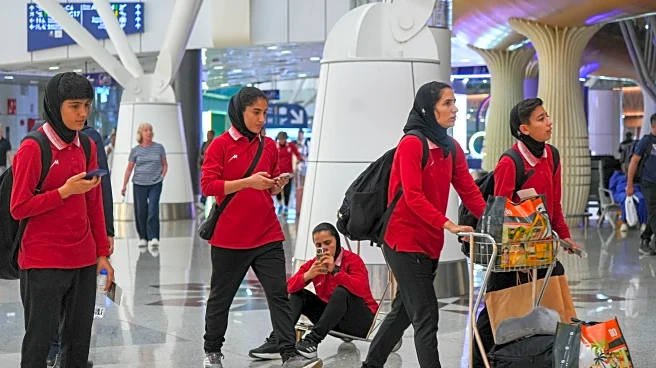
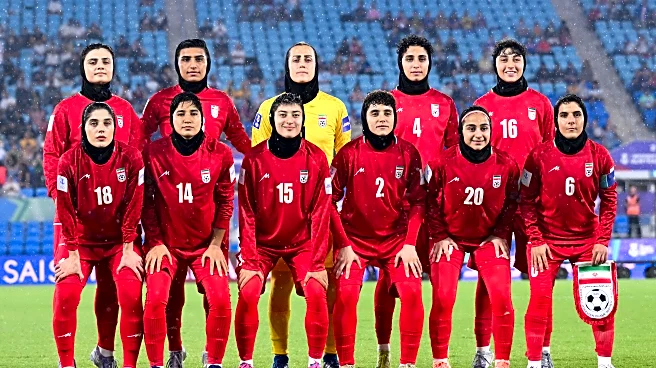
A fifth member of the Iranian women's soccer team, who initially accepted a refugee visa to stay in Australia, has decided to leave the country. This decision leaves only two of the original seven squad members who sought asylum in Australia. The Iranian authorities
have hailed the women's return as a victory against Australia and U.S. President Trump, while the Iranian diaspora in Australia attributes the decision to pressure from Tehran. The team had arrived in Australia for the Women's Asian Cup before the onset of the Middle East conflict. Assistant Immigration Minister Matt Thistlethwaite described the situation as complex, emphasizing the personal nature of the decisions made by the players. The Australian government continues to support the two players who remain in the country.
Why It's Important?
The situation highlights the intersection of sports, politics, and international relations. The Iranian government's reaction underscores the geopolitical tensions between Iran, Australia, and the U.S., particularly in the context of asylum and human rights. The decision of the players to return could be seen as a setback for those advocating for asylum rights and protection from political persecution. It also raises questions about the influence of home governments on athletes abroad and the challenges faced by asylum seekers in making decisions under pressure. The incident may impact future asylum cases and the diplomatic relations between the involved countries.
What's Next?
The Australian government is expected to continue providing support to the remaining asylum seekers. The situation may prompt further discussions on asylum policies and the protection of athletes who seek refuge due to political pressures. Additionally, the international community may scrutinize Iran's influence over its citizens abroad, potentially leading to diplomatic dialogues or actions. The broader implications for international sports events and the safety of athletes from politically volatile regions may also be considered by global sports organizations.
Beyond the Headlines
This development sheds light on the broader issue of how international sports can become entangled with political agendas. The case of the Iranian women's soccer team illustrates the potential for sports to serve as a platform for political expression and the risks athletes face when their actions are perceived as political statements. The situation also highlights the role of host countries in balancing diplomatic relations with the protection of human rights, particularly in cases involving asylum seekers from politically sensitive regions.