




What's Happening?
Rep. Jared Huffman (D-CA) recently participated in a discussion about his new book, "No Prophets: The Fight to Save Democracy from Christian Nationalism." The conversation, moderated by Mickey Dollens and featuring Ron Reagan, explored the themes of the book, which
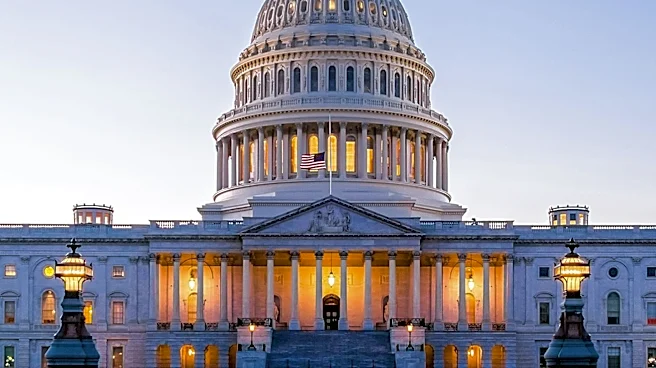
delves into the dangers of religious fundamentalism and its influence on American politics. Huffman, who founded the Congressional Freethought Caucus, emphasized the importance of upholding the Constitution and the rule of law against what he perceives as threats from Christian nationalism. The discussion also touched upon the January 6, 2021, attack on the Capitol, with Reagan acknowledging that he had not fully recognized the religious influences of the event until reading Huffman's book. Huffman revealed that a 'Purple Team' report investigating extremist groups and Christian nationalism's role in the insurrection was not fully released, reportedly due to concerns about misconstruing scrutiny of Christian nationalism as religious bigotry.
Why It's Important?
This discussion is important because it brings to the forefront the growing concern about Christian nationalism's impact on American democracy and governance. Huffman's book and the accompanying dialogue highlight how religious fundamentalism can intertwine with political movements, potentially undermining secular government principles and the separation of church and state. The revelation about the unreleased 'Purple Team' report on the January 6 Capitol attack suggests that the full extent of Christian nationalism's role in that event may not have been publicly disclosed, raising questions about transparency and accountability. This issue has significant implications for the future of U.S. politics, as it challenges the foundational values of a pluralistic society and the protection of diverse beliefs. Understanding these dynamics is crucial for safeguarding democratic institutions and ensuring that policy is rooted in facts and reason rather than religious dogma.
What's Next?
The release of Rep. Huffman's book and his ongoing discussions are likely to fuel further public and political debate on Christian nationalism. This could lead to increased scrutiny of the influence of religious groups in politics and potentially inspire more research or public discourse on the topic. Advocacy groups focused on the separation of church and state may leverage Huffman's work to push for greater awareness and policy changes. The discussion around the unreleased 'Purple Team' report could also prompt calls for its full disclosure, potentially reigniting debates about the January 6 events and the various factors that contributed to them. The book tour and related events will continue to engage audiences, fostering a deeper understanding of the challenges posed by religious extremism to democratic principles and potentially influencing future political discourse and legislative efforts.
Beyond the Headlines
Beyond the immediate political implications, Huffman's work delves into the deeper cultural and ethical dimensions of religious influence in public life. The book's emphasis on defending reason and critical thinking as foundational to liberty speaks to a broader societal challenge in an era of increasing polarization and misinformation. It raises questions about how a diverse society can maintain a shared commitment to democratic values when different groups hold fundamentally different views on the role of religion in government. The historical context of the January 6 attack, viewed through the lens of Christian nationalism, suggests a need for a more nuanced understanding of extremist movements and their motivations. This ongoing conversation could contribute to a re-evaluation of how religious freedom is interpreted and protected in the U.S., ensuring it does not infringe upon the rights and freedoms of all citizens, regardless of their beliefs.