
What's Happening?
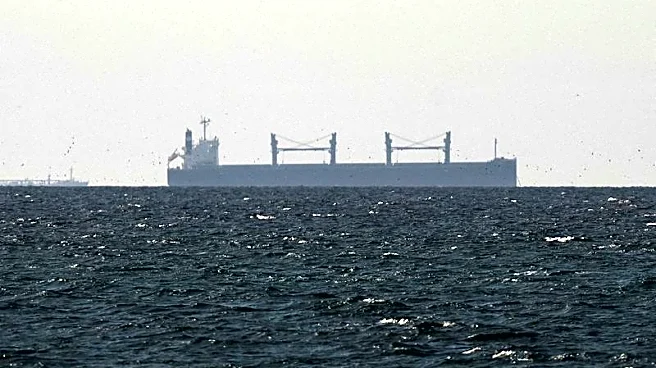
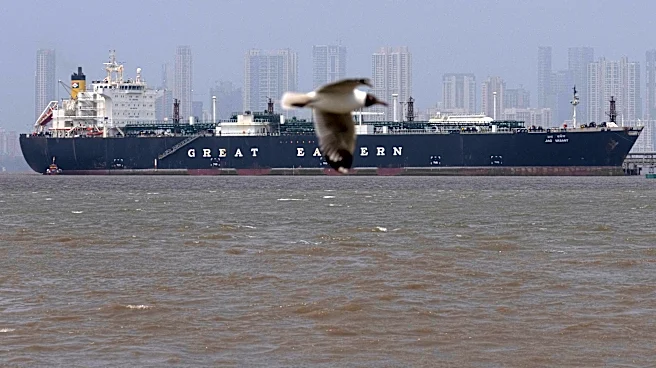
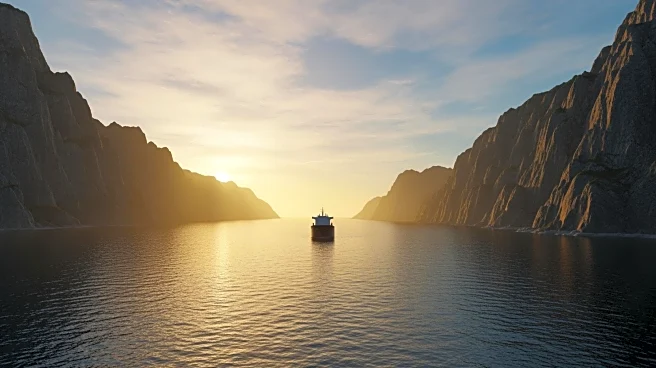
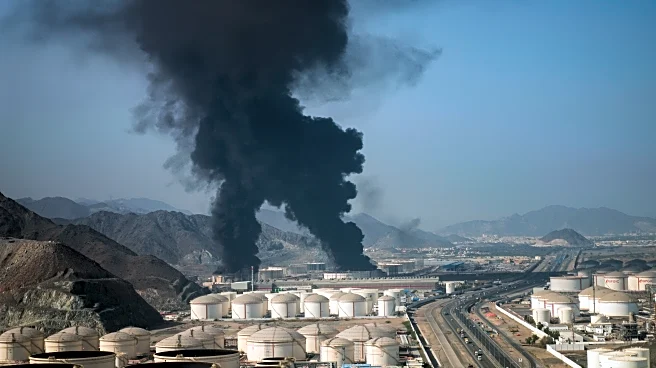
The Strait of Hormuz remains a critical chokepoint in global energy trade, even as the world transitions to a decarbonized economy. Historically, this narrow waterway has been vital for transporting a significant portion of the world's oil and liquefied
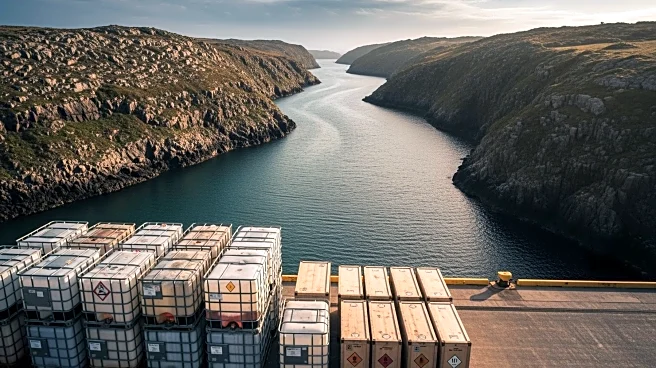
natural gas (LNG). In 2025, approximately 25% of the world's seaborne oil trade and over 110 billion cubic meters of LNG passed through the Strait. As the global energy landscape shifts towards synthetic fuels like ammonia and methanol, the strategic importance of Hormuz persists. Gulf states, including Saudi Arabia, the UAE, and Qatar, are adapting by investing in green hydrogen and ammonia projects. However, these developments do not eliminate the risks associated with maritime chokepoints. The International Renewable Energy Agency (IRENA) projects that a substantial portion of future hydrogen trade will still rely on shipping, maintaining the vulnerability of energy supply chains.
Why It's Important?
The continued reliance on the Strait of Hormuz underscores the persistent vulnerabilities in global energy security, even in a decarbonized world. As countries transition to synthetic fuels, the strategic importance of maritime routes remains. This has significant implications for energy-dependent industries, including transportation and agriculture, which rely on stable fuel supplies. The Gulf states' efforts to diversify their energy exports with green molecules highlight the ongoing need to balance economic interests with energy security. The potential for disruptions in the Strait could impact global supply chains, leading to increased costs and instability in markets reliant on these energy sources. This situation emphasizes the need for diversified energy routes and strategic reserves to mitigate risks associated with chokepoints like Hormuz.
What's Next?
As the world moves towards a decarbonized future, the focus will likely shift to enhancing energy security through diversified supply routes and increased local production of synthetic fuels. Gulf states may continue to invest in infrastructure that bypasses traditional chokepoints, such as pipelines and open-ocean access facilities. Additionally, countries may develop strategic reserves of critical synthetic fuels to buffer against potential disruptions. Policymakers and industry leaders will need to address the balance between maintaining economic growth and ensuring energy security in a world where maritime chokepoints still pose significant risks.
Beyond the Headlines
The transition to a decarbonized economy presents an opportunity to rethink global energy architecture. While synthetic fuels offer a cleaner alternative to fossil fuels, their production and distribution still depend on vulnerable maritime routes. This highlights the importance of developing resilient energy systems that can withstand geopolitical tensions and supply chain disruptions. The shift towards electrification and local production of synthetic fuels could reduce reliance on chokepoints like Hormuz, but it requires significant investment in infrastructure and technology. The future of energy security will depend on the ability to adapt to these changes and create a more distributed and resilient energy network.