







What's Happening?
Grand Farm has initiated Phase II of its Innovation Campus near Casselton, North Dakota, marked by a groundbreaking ceremony. This expansion includes a significant $5 million federal grant from the U.S. Economic Development Administration (EDA), complemented
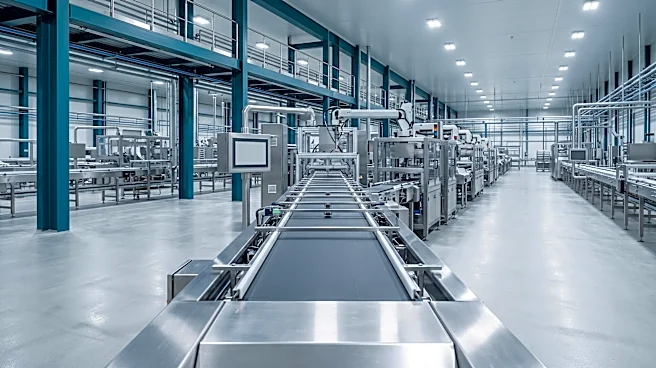
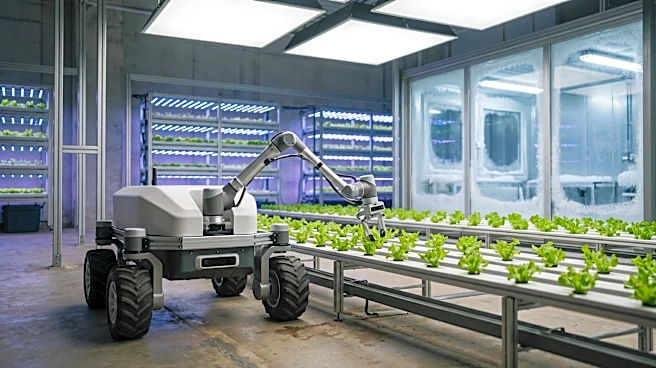
by $1.25 million in state funds. The primary focus of this funding is the construction of a new Indoor AgTech Test Track. This facility is designed to enable companies to rigorously test and validate agricultural technologies under controlled, severe cold-weather conditions, which is particularly crucial given North Dakota's challenging climate. Senator John Hoeven, a key proponent of the project, emphasized that this expansion will allow for year-round agricultural technology testing. The broader Phase II project, totaling $33.7 million, also encompasses an 8,500-square-foot field operations facility, funded in part by a 2025 $7 million North Dakota Autonomous Agriculture Grant. Additionally, Grand Farm has expanded its land footprint by 450 acres, now totaling 590 acres, and has secured AGCO’s Precision Technology Institute – North Dakota (PTI ND) as its inaugural anchor tenant. The campus also hosts a USDA-ARS work site and manages the USDA National Proving Grounds Network™.
Why It's Important?
This expansion of Grand Farm is critical for solidifying the U.S.'s leadership in agricultural innovation, as highlighted by Senator John Boozman, chairman of the Senate Committee on Agriculture, Nutrition and Forestry. The new Indoor AgTech Test Track addresses a significant need for year-round testing capabilities, especially in regions with harsh climates like North Dakota. This allows for faster development and deployment of advanced agricultural technologies, which can lead to increased efficiency, productivity, and sustainability in farming practices. The involvement of federal and state funding, alongside private investment and anchor tenants like AGCO, demonstrates a concerted effort to foster a robust ecosystem for agricultural technology. The establishment of a USDA-ARS work site and Grand Farm's role as the National Program Manager for the USDA National Proving Grounds Network™ further integrate the campus into national agricultural research and development efforts, ensuring that innovations are widely tested and adopted across the country. This initiative is expected to benefit U.S. farmers by providing access to cutting-edge tools and techniques, ultimately enhancing food security and economic stability in the agricultural sector.
What's Next?
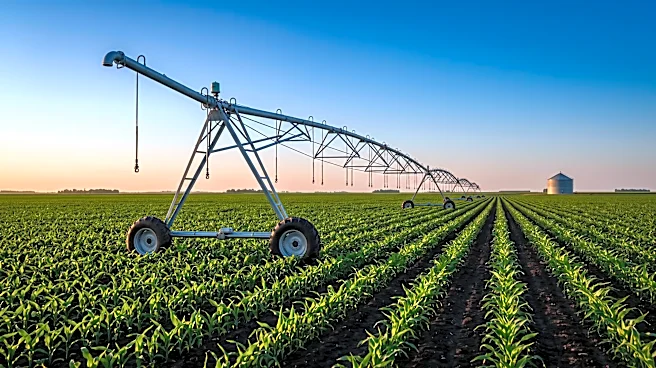
With the groundbreaking of Phase II, Grand Farm will proceed with the construction of the Indoor AgTech Test Track and the 8,500-square-foot field operations facility. The integration of the BenchBot platform, an open-source autonomous imaging system developed in collaboration with the USDA Agricultural Research Service (ARS), will continue to support early disease detection and data-driven agronomic decision-making, particularly for cereal crops. This platform is expected to generate AI-ready data, accelerating the development and deployment of new tools for growers. Grand Farm will also continue to host events, field trials, and support startup plots, leveraging its expanded facilities and increased acreage. The ongoing collaboration with entities like AGCO’s Precision Technology Institute – North Dakota (PTI ND) and the USDA National Proving Grounds Network™ will likely lead to further advancements and wider adoption of agricultural technologies. The long-term vision is for Grand Farm to continue positioning North Dakota as a central hub for agricultural innovation, attracting more investment and talent to the region.
Beyond the Headlines
The expansion of Grand Farm signifies a broader shift towards integrating advanced technology and data science into traditional agriculture, often referred to as AgTech. This initiative has profound implications beyond immediate technological advancements, touching upon economic development, workforce training, and environmental sustainability. By providing a dedicated space for year-round testing in challenging conditions, Grand Farm is addressing a critical bottleneck in agricultural innovation, which traditionally relies on seasonal outdoor trials. This accelerates the pace at which new solutions, such as autonomous machinery and AI-driven crop management, can be brought to market. Ethically, the development of AI-ready data through platforms like BenchBot raises questions about data ownership, privacy, and equitable access for all farmers, regardless of their scale. Culturally, this project reinforces North Dakota's historical identity as an agricultural powerhouse while simultaneously rebranding it as a leader in technological innovation, potentially attracting a new generation of tech-savvy agriculturalists. The long-term impact could include a more resilient and efficient food supply chain, reduced environmental footprint through precision agriculture, and new economic opportunities in rural areas.