



What's Happening?
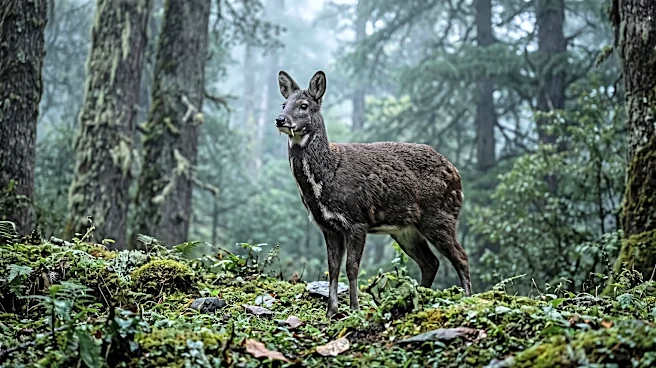
A new study conducted in the Kashmir Himalaya projects a drastic reduction in suitable habitat for the endangered Kashmir musk deer due to climate change. Under a very high-emissions scenario, the suitable habitat for this species could decline by 82.6%
by the period 2071-2100. The study, co-authored by Mohsin Javid from Aligarh Muslim University, highlights that potential wildlife corridors are also expected to contract by approximately half, which will impede movement between protected areas and increase the risk of population isolation. The Kashmir musk deer, classified as 'endangered' on the IUCN Red List, is already threatened by poaching for its musk gland, habitat loss, and human disturbance. Researchers used camera-trap records combined with environmental data to model habitat suitability under various climate scenarios, identifying that most projected climate refugia lie outside existing protected areas.
Why It's Important?
The projected habitat loss for the Kashmir musk deer signifies a critical threat to biodiversity in the Himalayan ecosystem. As a selective herbivore and prey species, the musk deer plays a vital role in influencing plant communities and nutrient cycling, and serves as prey for predators like leopards. Its decline could trigger cascading effects throughout the food web and disrupt the ecological balance of the region. The study underscores the broader implications of climate change on vulnerable species and the inadequacy of current protected area networks to safeguard them. The potential isolation of populations due to shrinking corridors also reduces genetic diversity, making the species more susceptible to diseases and environmental changes, thus increasing its extinction risk.
What's Next?
The findings of this study emphasize the urgent need for revised conservation strategies that extend beyond current protected area boundaries. Conservation efforts will likely need to focus on protecting high-elevation habitats identified as climate refugia, many of which are currently outside designated reserves. Maintaining connectivity between remaining habitat patches will be crucial, requiring measures to prevent infrastructure development in critical corridor bottlenecks and to regulate human access and disturbance. Strengthening anti-poaching surveillance and implementing community stewardship programs in key habitats outside protected areas will also be essential. Future actions will need to integrate climate change projections into long-term conservation planning to ensure the survival of the Kashmir musk deer and the broader Himalayan ecosystem.
Beyond the Headlines
The plight of the Kashmir musk deer highlights a global challenge where climate change intersects with existing anthropogenic pressures like poaching and habitat fragmentation. This situation underscores the ethical responsibility to protect endangered species and the ecosystems they inhabit, which often transcend national borders. Legally, it may prompt discussions on international cooperation for conservation efforts in transboundary regions like the Himalayas. Culturally, the loss of such iconic species can diminish the natural heritage of a region and impact local communities that may have traditional connections to the wildlife. The study also points to a long-term shift in conservation paradigms, moving from static protected areas to dynamic, climate-resilient landscape management that accounts for species movement and habitat shifts.