

What's Happening?
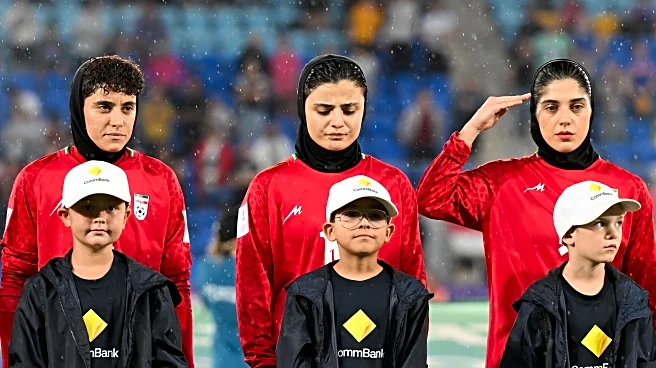
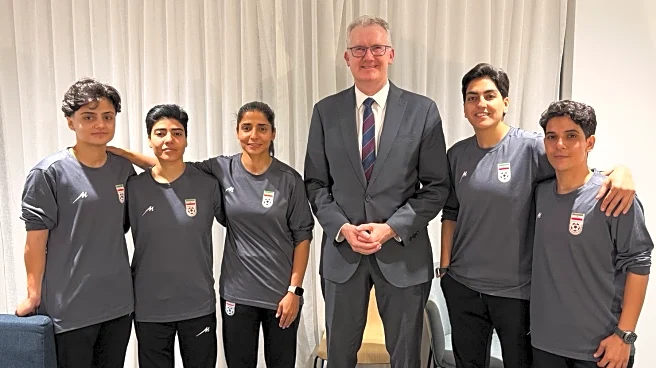
Australia has granted humanitarian visas to five members of the Iranian women's soccer team who sought asylum after refusing to sing the national anthem at an Asia Cup match. The players feared persecution upon returning to Iran due to their protest.
The Australian government acted swiftly, providing the visas a day after police assisted in extracting the women from their Iranian government handlers. Prime Minister Albanese stated that assistance is available to other players currently in Australia with the Iranian national team, though it is up to them to accept it. This move has drawn international attention and support, highlighting the ongoing issues of women's rights and political expression in Iran.
Why It's Important?
This development underscores the intersection of sports, politics, and human rights on the international stage. The asylum granted by Australia not only provides safety to the players but also sends a strong message about the country's stance on human rights and political freedom. It highlights the risks faced by athletes who use their platform to protest against oppressive regimes. The situation also draws attention to the broader issue of women's rights in Iran, where strict regulations and societal norms often limit personal freedoms. The international support for these players could encourage more athletes to speak out against injustices, potentially leading to increased pressure on the Iranian government to reform its policies.
What's Next?
The immediate future for the five players involves settling into their new lives in Australia, where they will likely receive support from local communities and human rights organizations. The broader implications may include increased scrutiny on Iran's treatment of athletes and women, potentially influencing international diplomatic relations. Other players on the Iranian team may also seek asylum, depending on their personal circumstances and the political climate in Iran. The situation could lead to further discussions within international sports organizations about the role of athletes in political protests and the support systems available to them.