




What's Happening?
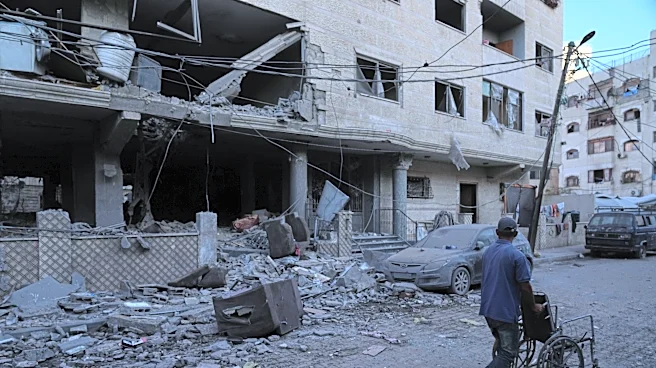
Angelina Jolie, a former United Nations special envoy, has drawn attention to the widespread destruction in the Gaza Strip by sharing satellite images that depict the extensive damage caused by the Israeli war. The images, comparing areas before and after
the conflict, show entire neighborhoods reduced to rubble, including homes, schools, universities, hospitals, roads, and water systems. Citing UN satellite analysis from June, Jolie stated that 82% of structures in Gaza have been damaged, with roughly two-thirds of these assessed as destroyed. She also highlighted that 1.98 million people, or 94% of Gaza’s population, are in urgent need of shelter assistance and essential items as winter approaches, noting that aid and shelter materials continue to face restrictions and delays. Jolie emphasized that while satellite imagery reveals the physical scale of destruction, it cannot fully convey the human impact on those who have lost family members or are struggling to survive.
Why It's Important?
This public appeal by Angelina Jolie, leveraging her platform and past association with the UN, brings renewed international focus to the humanitarian crisis in Gaza. Her use of satellite imagery provides a stark visual representation of the conflict's impact, potentially influencing public opinion and pressuring international bodies and governments to increase humanitarian efforts. The call for urgent aid and shelter, particularly with winter approaching, underscores the immediate life-threatening conditions faced by nearly two million people. The reported restrictions and delays in aid delivery highlight significant logistical and political challenges that impede humanitarian response, raising questions about accountability and the effectiveness of current international mechanisms. The long-term implications include the immense challenge of rebuilding critical infrastructure and communities, which will require substantial international support and a stable environment for reconstruction.
What's Next?
Jolie's call for shelter, humanitarian assistance, and medical supplies to reach civilians, along with the creation of conditions for Palestinians to rebuild, suggests a continued push for increased international intervention. The immediate focus will likely be on addressing the urgent needs for shelter and essential supplies before winter exacerbates the humanitarian crisis. This may lead to renewed diplomatic efforts to ease restrictions on aid entry into Gaza and to establish more reliable humanitarian corridors. Stakeholders, including international aid organizations and governments, will face increased pressure to respond to these calls. The long-term 'what's next' involves the monumental task of reconstruction, which will require significant financial commitments and a sustained period of peace and stability to allow for the rebuilding of homes, schools, hospitals, and communities.
Beyond the Headlines
The use of satellite imagery by a public figure like Angelina Jolie to illustrate conflict destruction introduces a new dimension to humanitarian advocacy, making the scale of devastation more tangible and harder to ignore. This approach bypasses traditional media filters and directly engages a global audience, potentially shifting narratives and fostering greater empathy. The emphasis on the human impact beyond physical destruction highlights the psychological and social trauma endured by the population, which will have profound long-term consequences for generations. Furthermore, the ongoing challenges in delivering aid and the call for conditions to allow rebuilding underscore deeper geopolitical issues surrounding access, sovereignty, and the rights of displaced populations. This situation could also prompt discussions on the role of celebrities in international diplomacy and humanitarian efforts, and the ethical considerations of using such platforms to influence global policy.