



What's Happening?
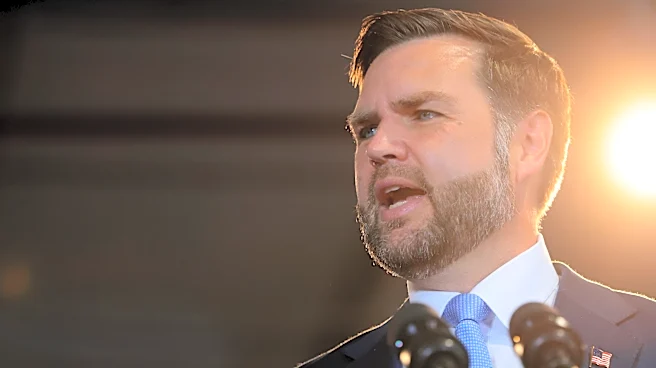
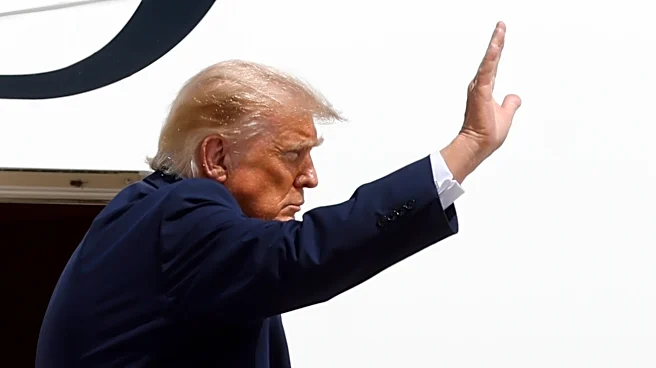
President Trump has frequently hinted at seeking a third term, despite the constitutional prohibition against it. He has posted about mounting another campaign, worn '2028' caps, and discussed potential methods to achieve this, such as being a running
mate to Vice President JD Vance in 2028 and having Vance step aside. However, more recently, President Trump has also begun to describe life after his presidency concludes in January 2029. During recent speeches, he has predicted he will be at home, potentially feeling left out as his successor claims credit for his accomplishments. He has made comments in Pennsylvania, Georgia, and Michigan suggesting he will be watching television and reading papers, and even joked about crying. These mixed signals have led to varied interpretations, with some suggesting he is contemplating his legacy, while others believe he is strategically keeping all options open.
Why It's Important?
President Trump's ambiguous statements regarding a potential third term and his post-presidency plans carry significant political implications. His continued teasing of a 2028 run, even while acknowledging constitutional limits, keeps him a central figure in future political discourse and fundraising efforts. This approach allows him to maintain influence within the Republican Party and among his base, potentially impacting future elections and candidate endorsements. The discussion of his post-presidency life, where he envisions a successor taking credit for his work, could be interpreted as an attempt to shape his legacy and preemptively criticize future administrations. This narrative could influence public perception of his accomplishments and set the stage for ongoing political commentary, regardless of his direct involvement in future elections. The dynamic also highlights the ongoing debate about presidential term limits and the potential for creative interpretations of constitutional law.
What's Next?
As President Trump's current term progresses, it is anticipated that he will continue to send mixed signals regarding his future political ambitions. This strategy allows him to maintain relevance and influence without committing to a specific path. Political analysts and the public will likely scrutinize his statements for any definitive indications of his intentions, particularly as the 2028 election cycle approaches. His actions and rhetoric will continue to shape the Republican Party's direction and potentially influence the candidacies of other hopefuls. The focus on his legacy and the potential for a successor to claim credit for his achievements suggests a continued engagement with public opinion and a desire to control the narrative surrounding his time in office. Further comments on 'loopholes' or 'methods' to seek a third term, even if dismissed, will likely fuel ongoing constitutional discussions.
Beyond the Headlines
The ongoing ambiguity surrounding President Trump's future political intentions, particularly his flirtation with a third term, underscores a deeper tension within American political culture regarding presidential power and constitutional norms. While the 22nd Amendment clearly limits a president to two terms, President Trump's repeated allusions to circumventing this rule, even in jest, can normalize discussions around constitutional boundaries. This could have long-term implications for how future leaders and their supporters perceive and potentially challenge established legal frameworks. Furthermore, his focus on legacy and the potential for future presidents to claim his accomplishments reflects a broader concern among leaders about their place in history. This emphasis on personal legacy over institutional continuity could contribute to a more personalized and less institution-focused political landscape, where individual leaders' narratives become paramount. The public's reaction to these statements also reveals the varying degrees of adherence to constitutional principles and the power of charismatic figures to shape political discourse.