



What's Happening?
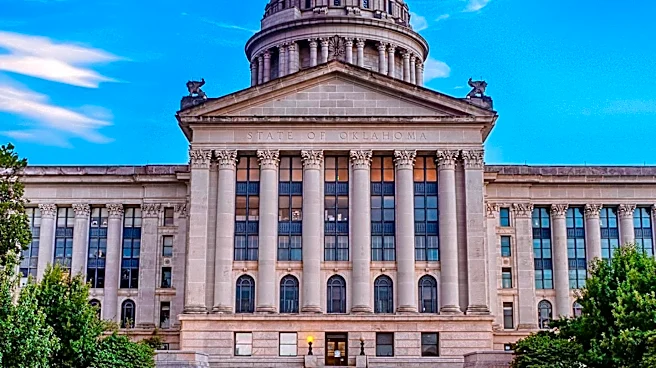
Oklahoma Watch is investigating the relationship between Oklahoma's high incarceration rates and its voter participation. In Oklahoma, individuals convicted of felonies are barred from voting until they complete their entire sentences, including parole
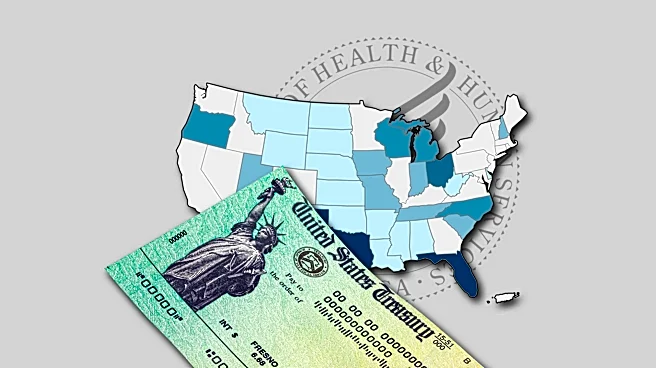
and probation. This policy reduces the number of voting-age citizens eligible to participate in elections. Despite having the fourth-highest incarceration rate in the U.S., nearly 1.5 times the national average, Oklahoma's disenfranchisement rate stands at 1.4% of the voting-eligible population as of 2024, which is comparable to the national rate of 1.7%. This contrasts with states like Mississippi, which has a 5.4% disenfranchisement rate and permanently disenfranchises some individuals. Other states, such as Tennessee and Florida, have higher disenfranchisement rates (7.7% and 6.1% respectively) due to policies that bar individuals from voting post-sentence if they have unpaid legal monetary obligations.
Why It's Important?
This issue is important for U.S. politics and civil society as it highlights how state-level policies on felon disenfranchisement can impact voter participation and democratic representation. While Oklahoma's disenfranchisement rate is on par with the national average despite its high incarceration rate, the underlying policies still restrict a segment of the population from voting. This raises questions about civic engagement, rehabilitation, and the fairness of electoral processes. The comparison with other states, particularly those with higher disenfranchisement rates due to financial obligations, underscores the varied approaches to voting rights for individuals with criminal convictions across the U.S. These policies can disproportionately affect certain communities, influencing election outcomes and the demographic makeup of the electorate, thereby shaping public policy and political discourse.
What's Next?
Oklahoma Watch's ongoing investigation suggests a continued focus on this topic, potentially leading to further analysis and public discourse on voter disenfranchisement laws in Oklahoma and across the U.S. The findings could inform advocacy efforts by civil rights organizations and policy debates among lawmakers regarding voting rights reform. Depending on public and political reactions, there might be legislative proposals to amend current disenfranchisement laws, either to expand voting access for individuals with past felony convictions or to clarify existing regulations. The comparison with other states' policies could also serve as a benchmark for Oklahoma to re-evaluate its own approach, potentially leading to changes that align with broader national trends or specific social justice objectives related to re-enfranchisement.
Beyond the Headlines
Beyond the immediate statistics, the discussion around voter participation and incarceration rates touches upon fundamental questions of citizenship, punishment, and reintegration into society. The varying state laws reflect different philosophies on whether the right to vote should be permanently or temporarily revoked for individuals with criminal convictions. This issue has significant ethical and social justice dimensions, as it impacts the ability of formerly incarcerated individuals to fully participate in civic life and advocate for their interests. The long-term implications include the potential for a more inclusive democracy if voting rights are restored, or continued marginalization if restrictive policies persist. This debate also intersects with broader discussions on criminal justice reform and the societal impact of mass incarceration on communities and democratic processes in the U.S.