


What's Happening?
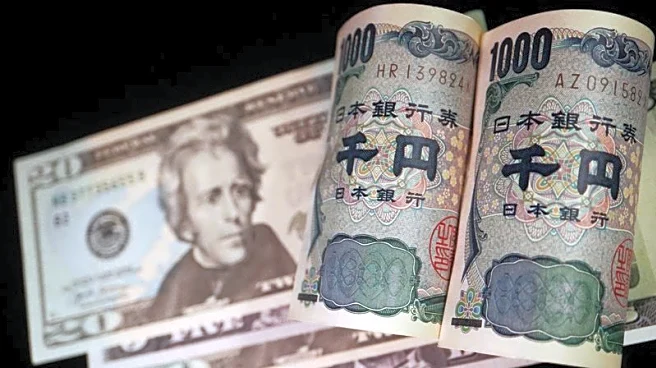
China's yuan remained stable on Monday, trading close to a 14-month high. This stability follows the People's Bank of China's (PBOC) decision to set a weaker-than-expected midpoint rate, indicating caution against a rapid appreciation of the currency.
The PBOC set the midpoint rate at 7.0572 per dollar, which was 165 pips weaker than a Reuters estimate. The yuan opened at 7.0408 per dollar and was last trading at 7.041. The central bank has been consistently setting the midpoint rate weaker than expected since late November, allowing the yuan to trade within a 2% range of the fixed midpoint each day.
Why It's Important?
The PBOC's actions reflect a strategic approach to manage the yuan's value, balancing between supporting exports and controlling inflation. A stronger yuan could impact China's export competitiveness, while a weaker currency might lead to inflationary pressures. The stability of the yuan is crucial for global markets, as China is a major trading partner for many countries, including the U.S. The PBOC's cautious stance suggests a focus on maintaining economic stability amid global uncertainties, which could influence international trade dynamics and economic policies.
What's Next?
The PBOC is likely to continue its cautious approach in setting the yuan's midpoint rate, closely monitoring global economic conditions and domestic economic indicators. Market participants will watch for any shifts in the PBOC's policy that might signal a change in China's economic strategy. The yuan's performance will also be influenced by external factors such as U.S. monetary policy and global trade tensions, which could prompt further adjustments by the PBOC.