
What's Happening?
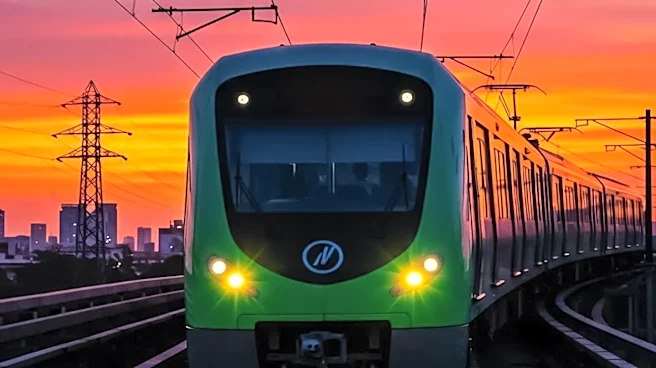
Lagos, Nigeria, has received three new trains for its Red Line urban rail network, comprising a total of 24 cars. Each train is designed to carry up to 2,000 passengers per trip, significantly increasing
the capacity of the Oyingbo–Agbado route. These new additions are part of Lagos State's ongoing investment in its urban rail transportation system, aimed at easing the daily commuting challenges faced by the city's more than 20 million residents. The trains are scheduled to commence operations by the end of 2026, which is expected to allow for more frequent service along the Red Line corridor. The Lagos Rail Mass Transit network, which includes the Red Line (operational since 2024 with a theoretical capacity of 500,000 passengers daily) and the Blue Line (opened September 2023, with ongoing expansion to increase capacity from 175,000 to 250,000 passengers daily), continues to develop to meet growing public transportation demands.
Why It's Important?
The expansion of Lagos's urban rail network is crucial for improving the quality of life and economic productivity in one of Africa's largest and most densely populated cities. By increasing the capacity and frequency of train services, the city aims to reduce reliance on less reliable and often uncomfortable minibuses and three-wheeled taxis. This shift towards a more efficient public transport system can lead to reduced traffic congestion, lower commuting times, and improved air quality. For businesses, a more efficient transport network means better connectivity for employees and goods, potentially boosting economic activity. The investment also signals a commitment by Lagos State to modern infrastructure development, which can attract further investment and foster sustainable urban growth. The success of this initiative could serve as a model for other rapidly urbanizing cities facing similar transportation challenges.
What's Next?
The three new trains are slated to enter service before the end of 2026, at which point they are expected to significantly enhance the Red Line's operational capacity and service frequency. While the rail network's development is progressing, demand for public transportation continues to grow, indicating that further investments and expansions may be necessary to fully address the city's needs. The Lagos State government will likely monitor the impact of these new trains on commuter flow and overall system efficiency to inform future phases of urban transport development. Continued efforts will focus on integrating the rail network with other modes of transport to create a comprehensive and seamless commuting experience for residents.
Beyond the Headlines
The ongoing development of Lagos's urban rail system highlights a broader trend in rapidly growing megacities: the critical need for robust public infrastructure to support burgeoning populations and economic activity. Beyond the immediate benefits of reduced commute times and congestion, a well-functioning public transport system can foster social equity by providing accessible and affordable mobility options for all residents. It also plays a vital role in environmental sustainability by reducing carbon emissions from private vehicles. The challenges faced by Lagos, such as persistent reliance on informal transport and the continuous growth in demand, underscore the complexity of urban planning in such dynamic environments. The long-term success of these rail projects will depend not only on infrastructure development but also on effective management, maintenance, and integration with urban development strategies.