






What's Happening?
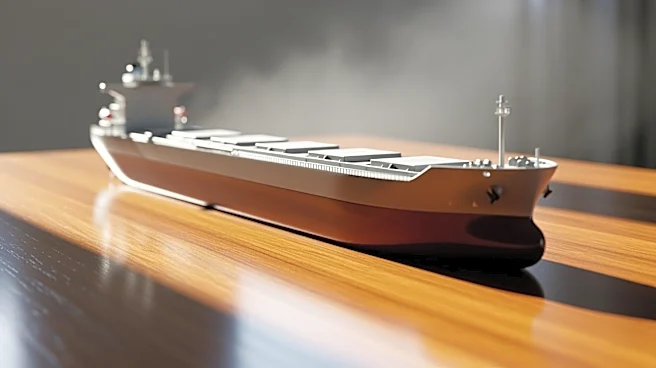
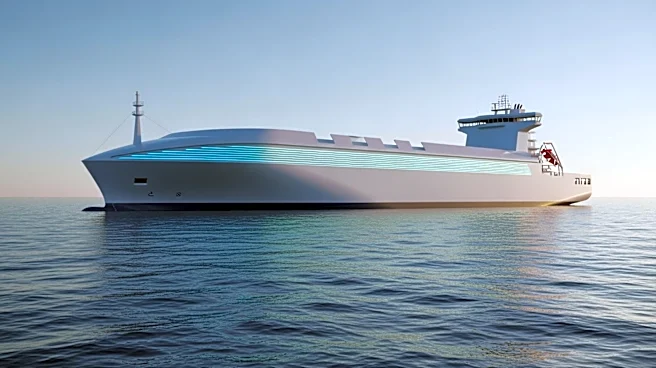
China has introduced its first fully-electric containerships, marking a significant step in sustainable maritime transport. The vessels, developed by China State Shipbuilding Corporation, are equipped with large battery systems and are designed for coastal
shipping routes. These ships, measuring 128 meters in length, are powered by 10 container-sized batteries with a total power supply of approximately 19,600 kWh. They are expected to reduce CO2 emissions by about 1,462 tonnes annually compared to conventional ships. The electric propulsion system is noted for its responsiveness and noise reduction. The ships also feature open-deck designs to enhance cargo handling efficiency and have been designed to minimize wind resistance. The first ship, Ning Yuan Dian Kun, has been delivered and will operate on a 70-nautical-mile route between Ningbo-Zhoushan and Jiaxing.
Why It's Important?
The introduction of fully-electric containerships represents a major advancement in reducing the carbon footprint of maritime transport, a sector traditionally reliant on fossil fuels. By significantly cutting CO2 emissions, these ships contribute to global efforts to combat climate change. The development also underscores China's commitment to leading in green shipping technologies, potentially setting a precedent for other countries to follow. The use of electric propulsion not only reduces emissions but also operational noise, improving the environmental impact of shipping operations. This innovation could influence global shipping practices, encouraging the adoption of similar technologies worldwide.
What's Next?
Following the successful launch of the first vessel, the sister ship, Ning Yuan Dian Peng, is scheduled for sea trials, with delivery expected in June. As these ships begin regular operations, their performance will be closely monitored to assess the feasibility of expanding electric propulsion technology to other shipping routes and vessel types. The success of these ships could prompt further investment in electric maritime technologies and infrastructure, such as charging stations along major shipping routes.