








What's Happening?
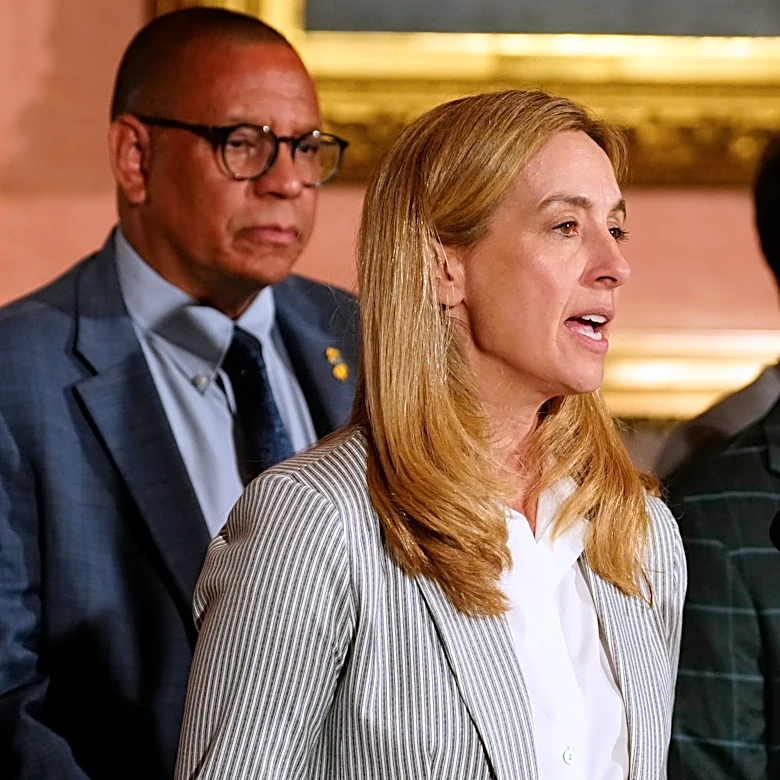
A bipartisan effort is underway in Congress to ensure the legislative body takes an active role in establishing guardrails for artificial intelligence (AI). Representatives Jay Obernolte (R-Calif.) and Lori Trahan (D-Mass.) are leading this initiative,
advocating for a bill that would bring Congress off the sidelines in regulating new AI technologies. The push comes as AI rapidly advances, raising concerns about its societal impact and the need for proactive legislative oversight. The lawmakers aim to create a framework that addresses the challenges and opportunities presented by AI, ensuring that safeguards are in place to protect the public and guide responsible development.
Why It's Important?
The establishment of AI guardrails by Congress is critically important for the U.S. as the technology continues to evolve at an unprecedented pace. Without clear legislative guidance, the development and deployment of AI could lead to unforeseen ethical dilemmas, privacy concerns, job displacement, and potential misuse. Congressional involvement ensures that a broad range of perspectives and public interests are considered, rather than leaving regulation solely to tech companies or executive agencies. This bipartisan effort signals a recognition of AI's transformative power and the necessity of a unified national strategy to harness its benefits while mitigating its risks, thereby shaping the future of technology and its integration into American society and economy.
What's Next?
The bipartisan bill proposed by Representatives Obernolte and Trahan will likely move through the legislative process, involving committee hearings, debates, and potential amendments. The discussions will focus on defining the scope of AI regulation, identifying key areas for intervention such as data privacy, algorithmic bias, and accountability, and determining the appropriate balance between fostering innovation and ensuring public safety. Stakeholders from the tech industry, civil liberties groups, and academic institutions are expected to contribute to the debate. The outcome of this legislative push will set precedents for how the U.S. approaches emerging technologies, potentially influencing international standards and fostering a more secure and equitable AI landscape.
Beyond the Headlines
The effort to establish AI guardrails goes beyond immediate regulatory concerns, touching upon fundamental questions about the future of work, human autonomy, and the nature of intelligence itself. The rapid advancement of AI challenges existing legal and ethical frameworks, prompting a re-evaluation of societal norms and values. Congressional engagement in this area signifies a proactive stance in shaping a technological future that aligns with democratic principles. It also highlights the increasing need for lawmakers to develop a deep understanding of complex scientific and technological issues to govern effectively in the 21st century, fostering a more informed and adaptable legislative body capable of addressing the profound implications of emerging technologies.