



What's Happening?
Indonesia is encountering difficulties in fulfilling its commitments under a new trade agreement with the United States, which requires a significant increase in U.S. agricultural imports. The deal, finalized last week, reduces U.S. tariffs on Indonesian
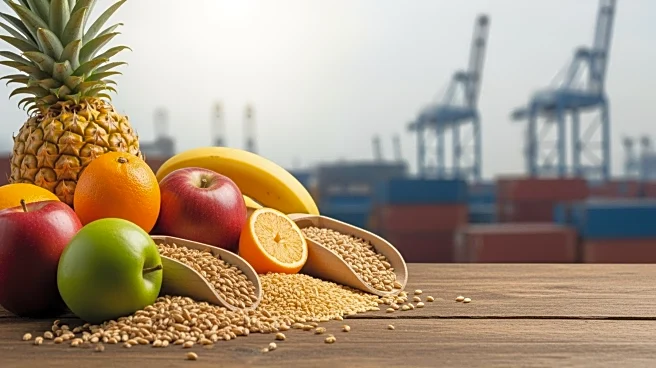
goods from 32% to 19%, exempting key commodities like palm oil, cocoa, and rubber from import duties. In exchange, Indonesia has pledged to increase its annual imports of U.S. wheat, soybeans, and soymeal. However, traders express concerns about Indonesia's ability to meet these commitments, particularly the substantial rise in soymeal imports, which now falls under the responsibility of a state agency tasked with purchasing animal feed. The U.S. aims to diversify its agricultural exports beyond China, and Indonesia's new commitments exceed its current annual imports, raising questions about domestic demand and supply balance.
Why It's Important?
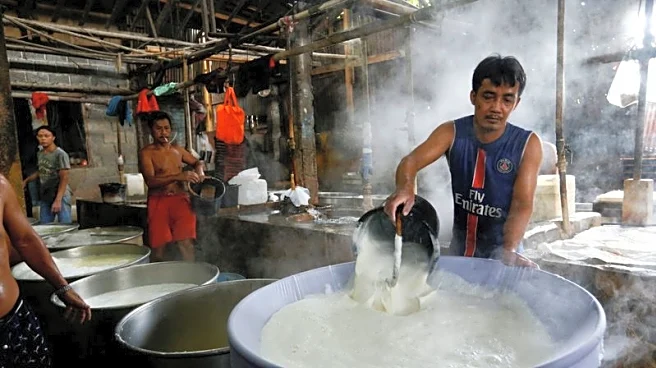
The trade agreement between Indonesia and the U.S. holds significant implications for both countries' agricultural sectors. For the U.S., this deal represents an opportunity to expand its agricultural export markets amid ongoing trade tensions with China. However, Indonesia's struggle to meet its import commitments could impact the anticipated benefits for U.S. farmers and exporters. The increased demand for U.S. soybeans and soymeal is crucial for Indonesia's food industry, particularly for products like tofu and tempeh. Failure to meet these commitments could disrupt supply chains and affect domestic markets. Additionally, the reliance on a state agency to manage these imports may lead to inefficiencies and higher costs, potentially affecting Indonesia's agricultural sector and its trade relations with the U.S.
What's Next?
Indonesia's ability to fulfill its import commitments will depend on the state agency's capacity to manage the increased volumes and the government's regulatory support. The agency, Berdikari, is preparing to import significant quantities of soybean meal and is awaiting government regulations expected in March. The outcome of these efforts will be closely monitored by both countries, as it could influence future trade negotiations and agreements. The U.S. may also need to consider alternative strategies to ensure the success of its agricultural export diversification efforts.