
What's Happening?
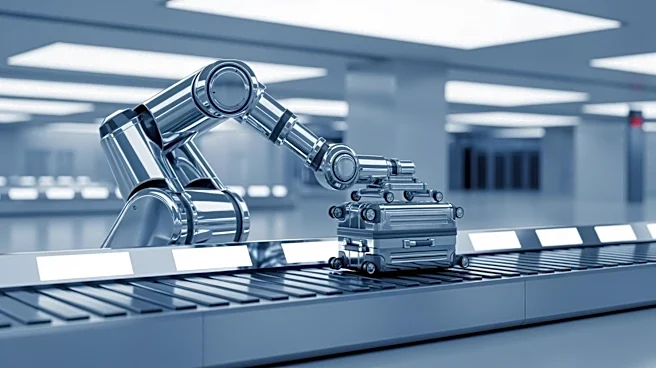
Japan Airlines is introducing humanoid robots to assist with baggage handling at Tokyo's Haneda Airport, starting in May. These robots, manufactured by China's Unitree Robotics, are part of an effort to address
labor shortages in the aviation sector. The trial, which will run until 2028, aims to integrate these robots into the airport's operations, potentially making them a permanent fixture by 2027. The robots are designed to perform tasks such as moving luggage and cargo on the tarmac, providing additional support to human workers. This initiative comes as Japan faces a surge in tourism and a declining workforce, necessitating innovative solutions to meet growing demands.
Why It's Important?
The deployment of humanoid robots at Haneda Airport highlights the increasing reliance on automation to address labor shortages in critical sectors. As Japan continues to experience a decline in its workforce, particularly in logistics and transportation, the use of robots could help mitigate the impact on human workers by reducing their physical workload. This move also reflects a broader trend in the aviation industry towards automation, as airports worldwide seek to enhance efficiency and cope with rising passenger numbers. The success of this trial could pave the way for similar implementations in other airports, potentially transforming how ground operations are conducted.
What's Next?
As the trial progresses, Japan Airlines and its partners will evaluate the performance of the humanoid robots and explore expanding their roles to include tasks such as aircraft cabin cleaning. The trial's outcome will be closely watched by other industry stakeholders, as it could influence future decisions regarding automation in airport operations. If successful, the initiative could lead to wider adoption of humanoid robots in various sectors, offering a solution to labor shortages and enhancing operational efficiency.