


What's Happening?
Rapid City officials are advising drivers to be extra vigilant on the roads as daylight saving time concludes this weekend. The change will result in earlier sunsets, with darkness arriving before 5 p.m. for the next seven weeks. This reduced visibility
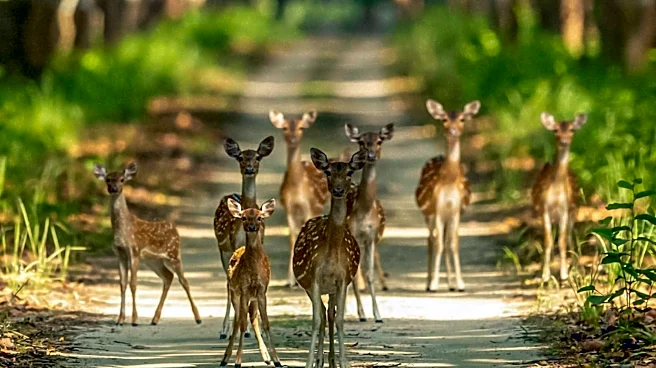
during peak commuting hours significantly increases the likelihood of encountering deer on roadways. Deer are most active during dawn and dusk, coinciding with many residents' commutes. South Dakota is recognized as one of the states with the highest rates of deer-vehicle collisions nationwide, and Rapid City itself has a substantial deer population, making this warning particularly relevant for local motorists. The city's Public Works Administration operations manager, Shannon Truax, highlighted that the overlap of increased deer activity and darker driving conditions presents challenges for drivers, urging them to take additional precautions.
Why It's Important?
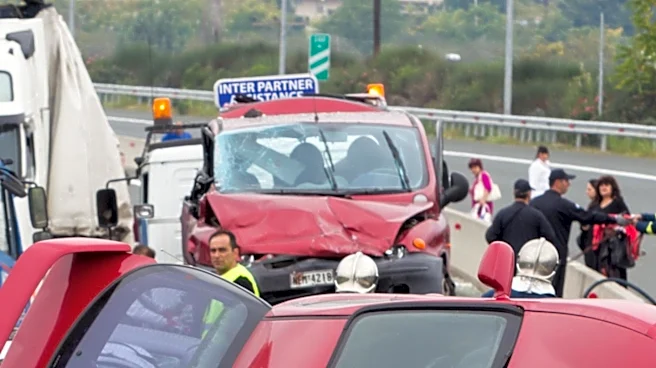
The increased risk of deer-vehicle collisions following the end of daylight saving time has significant implications for public safety and local infrastructure in Rapid City. A higher incidence of such accidents can lead to serious injuries or fatalities for drivers and passengers, as well as substantial property damage to vehicles. Economically, these collisions can result in increased insurance claims, higher repair costs, and potential disruptions to daily commutes and local commerce. For the city, managing road safety and responding to incidents involving wildlife requires resources, including animal removal services. The warning underscores a recurring seasonal challenge that impacts residents' daily lives and highlights the importance of proactive public awareness campaigns to mitigate risks associated with environmental changes.
What's Next?
Rapid City officials are encouraging drivers to adjust their habits to the earlier onset of darkness. Motorists are advised to allow extra travel time, remain aware of their surroundings, and exercise caution, especially during early morning and evening hours. Specific recommendations include watching for deer emerging from shadows along roadsides and being prepared for sudden movements into traffic. Additionally, drivers are reminded to look out for pedestrians and bicyclists, who become harder to spot in low-light conditions. Residents who encounter a deceased animal on the roadway are instructed to report it to the city’s non-emergency dispatch line at 605-394-4131 for pickup and disposal, typically within 48 hours. These measures aim to reduce the number of deer-vehicle incidents and enhance overall road safety during the upcoming weeks.
Beyond the Headlines
The annual shift from daylight saving time and its impact on wildlife-vehicle interactions points to a broader ecological and urban planning challenge. As urban areas expand, human and animal habitats increasingly overlap, leading to more frequent encounters. This situation highlights the need for ongoing strategies beyond seasonal warnings, such as wildlife corridors, fencing in high-risk areas, and public education on wildlife behavior. The issue also touches upon the debate surrounding daylight saving time itself, with some arguing for its abolition due to various impacts, including potential safety concerns. The consistent high rate of deer-vehicle collisions in South Dakota suggests a systemic issue that may warrant more comprehensive, long-term solutions to protect both human lives and local wildlife populations.