



What's Happening?
São Paulo is bracing for a significant shift in weather conditions as an extratropical cyclone begins to form between Rio Grande do Sul and Uruguay. This system is expected to intensify and bring strong winds and a notable drop in temperatures to the state.
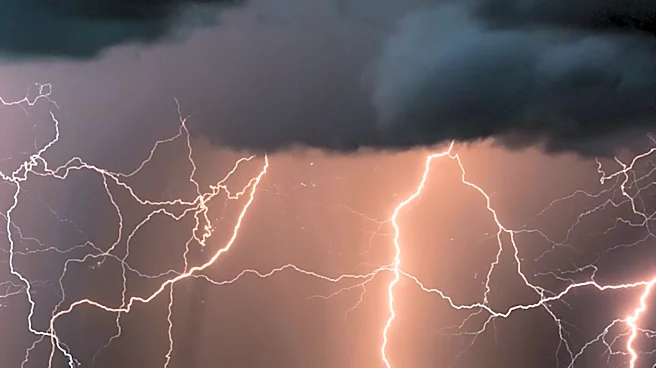
While widespread rain is not anticipated across most of São Paulo due to low atmospheric humidity, isolated moderate to strong showers, electrical discharges, hail, and wind gusts are possible, according to an alert from the State Civil Defense. Wind gusts could reach up to 70 km/h in central-eastern São Paulo by Friday. Temperatures are projected to fall sharply, with Friday's maximum reaching 26°C and a minimum of 14°C, a significant drop from Thursday's high of 32°C. The weekend will see continued cooler temperatures, with highs around 23-24°C and lows around 11°C.
Why It's Important?
The impending weather changes in São Paulo carry several important implications. The strong winds and potential for isolated severe weather could disrupt daily life, affecting transportation, infrastructure, and outdoor activities. For residents, the sudden drop in temperature after a period of heat necessitates adjustments in clothing and heating, potentially impacting energy consumption. Businesses, particularly those reliant on outdoor operations or sensitive to weather conditions, may face operational challenges. The possibility of dust storms in the interior of São Paulo, caused by strong winds over dry soil, could affect air quality and public health. While not directly impacting the U.S., this event highlights the increasing frequency and intensity of extreme weather phenomena globally, which can have ripple effects on international supply chains and climate-related discussions.
What's Next?
Residents and authorities in São Paulo will need to monitor weather updates closely and take necessary precautions. The Civil Defense's alert for potential severe weather indicates a need for preparedness, especially regarding strong winds and localized heavy rainfall. The significant temperature drop will require adjustments in daily routines and potentially increased demand for heating. The formation of the extratropical cyclone and its subsequent impact on the weather patterns across the South and Southeast of Brazil will be closely watched by meteorologists. This event serves as a reminder for urban centers to continuously assess and improve their resilience to extreme weather conditions, which are becoming more common due to climate change.
Beyond the Headlines
The occurrence of an extratropical cyclone bringing such a drastic change in weather to a major metropolitan area like São Paulo underscores the broader challenges posed by climate variability. While this specific event is a natural phenomenon, its intensity and impact can be exacerbated by climate change. Cities worldwide are grappling with the need to adapt to more unpredictable weather patterns, which can strain infrastructure, public services, and emergency response systems. This event could prompt further discussions and investments in climate resilience measures, urban planning that accounts for extreme weather, and public awareness campaigns to ensure citizens are prepared. The long-term implications involve not just immediate responses but also strategic planning for a future with potentially more frequent and severe weather events.