




What's Happening?
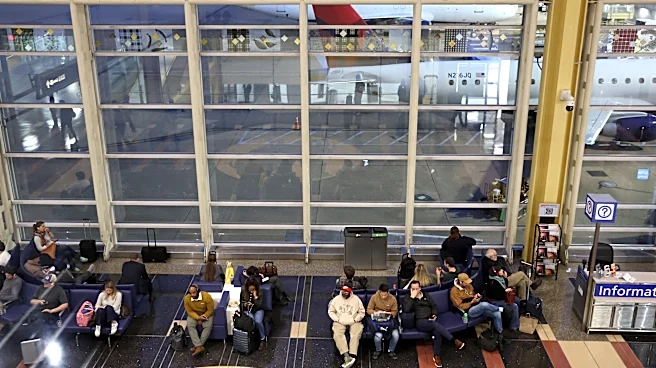
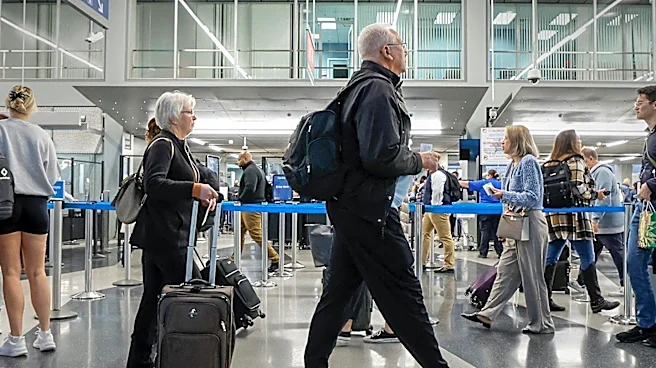
A nationwide ground stop issued by the Federal Aviation Administration (FAA) on Friday led to significant travel disruptions at Orlando International Airport (MCO) that continued into Saturday. The four-hour ground stop resulted in numerous flight delays
and cancellations, leaving many passengers stranded, exhausted, or forced to abandon their travel plans. For instance, Terry Grimes and his wife, who were scheduled to fly to Puerto Rico, had their flight canceled at 2 a.m. and ultimately gave up on their trip after 26 hours of waiting. Similarly, Emma and Lily Graves, traveling for a tennis tournament, faced uncertainty regarding their Monday flight due to the ongoing issues. Airlines at MCO are working to restore normal schedules, but the ripple effects of the technical failure are still being felt by travelers.
Why It's Important?
The FAA ground stop highlights the vulnerability of the U.S. air travel system to technical failures and their cascading effects. Such widespread disruptions can have significant economic consequences, impacting tourism, business travel, and the logistics industry. For individuals, canceled flights mean lost vacation time, missed business opportunities, and unexpected expenses for accommodations and rebooking. The incident also underscores the critical role of the FAA in maintaining the stability and reliability of air traffic control, a key component of national infrastructure. The prolonged impact at a major hub like Orlando International Airport demonstrates how a single technical issue can create a ripple effect across the entire national air travel network, affecting thousands of passengers and potentially millions of dollars in economic activity.
What's Next?
Airlines are currently focused on restoring normal operations and rebooking affected passengers. Travelers planning to fly through Orlando International Airport are advised to check directly with their airlines for the latest flight status before heading to the airport. Federal officials are investigating the technical failure that caused the nationwide ground stop, and the findings of this investigation will be crucial for implementing measures to prevent similar incidents in the future. Depending on the outcome of the investigation, there could be calls for increased investment in FAA infrastructure and technology to enhance resilience and prevent future widespread disruptions. The incident may also prompt airlines to review and improve their contingency plans for managing large-scale cancellations and delays.
Beyond the Headlines
Beyond the immediate travel chaos, this incident raises broader questions about the modernization and resilience of critical national infrastructure. The reliance on complex technological systems for air traffic control means that any failure can have far-reaching consequences. This event could spur discussions within government and industry about the need for more robust backup systems, enhanced cybersecurity measures, and continuous upgrades to prevent future technical glitches from paralyzing air travel. The human element of such disruptions, including the stress and financial burden on travelers, also brings to light the need for clearer communication and more efficient support systems from airlines and airports during crises. The incident serves as a stark reminder of the interconnectedness of modern systems and the potential for single points of failure to impact daily life on a national scale.