
What's Happening?
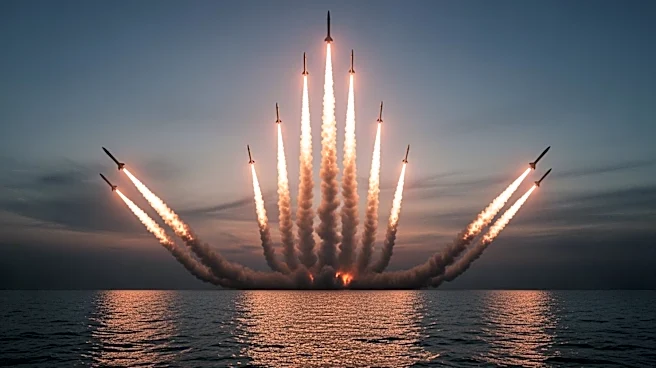
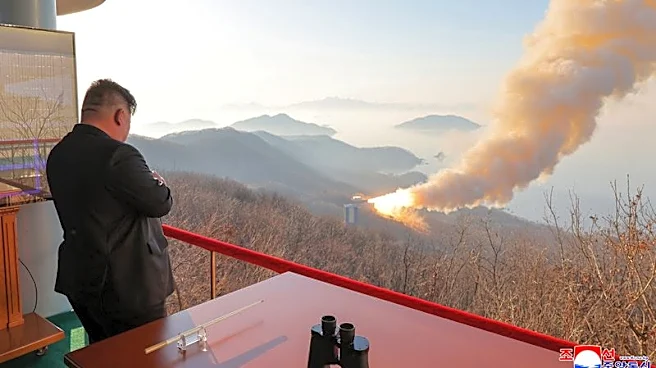
North Korea has conducted a series of suspected ballistic missile launches, as reported by Japan. This marks the seventh such launch by North Korea this year and the fourth in April alone. The missiles
reportedly fell outside Japan's exclusive economic zone, prompting an immediate response from the Japanese government. Prime Minister Sanae Takaichi convened an emergency response team at the Crisis Management Center to gather information and ensure public safety. Japanese Defense Minister Shinjiro Koizumi confirmed the multiple launches and emphasized the need for readiness in case of further contingencies. The launches are seen as part of North Korea's efforts to enhance its military capabilities, despite violating United Nations Security Council resolutions.
Why It's Important?
The missile launches by North Korea are significant as they represent a continued challenge to international norms and security in the region. These actions violate UN Security Council resolutions, which prohibit North Korea from conducting ballistic missile tests. The launches also highlight the ongoing tensions in the region, particularly as North Korea seeks to advance its nuclear and missile capabilities. This situation poses a potential threat to regional stability and could lead to increased military readiness and diplomatic efforts by neighboring countries, including Japan, South Korea, and the United States. The coordination among these nations underscores the seriousness of the threat and the need for a unified response to North Korea's actions.
What's Next?
In response to the missile launches, Japan, South Korea, and the United States are closely coordinating to analyze the situation and determine appropriate measures. This may involve increased diplomatic efforts to address the violations of UN resolutions and to prevent further escalation. The international community may also consider additional sanctions or diplomatic actions to pressure North Korea into compliance. Meanwhile, Japan is maintaining a state of heightened readiness to ensure the safety of its citizens and to prepare for any potential contingencies. The situation remains fluid, and further developments are likely as more information becomes available.