






What's Happening?
The Coalition for Epidemic Preparedness Innovation (CEPI) and Gavi, a global vaccine alliance, have committed over $100 million to fast-track the development of vaccines targeting the Bundibugyo strain of Ebola, which is currently driving a significant
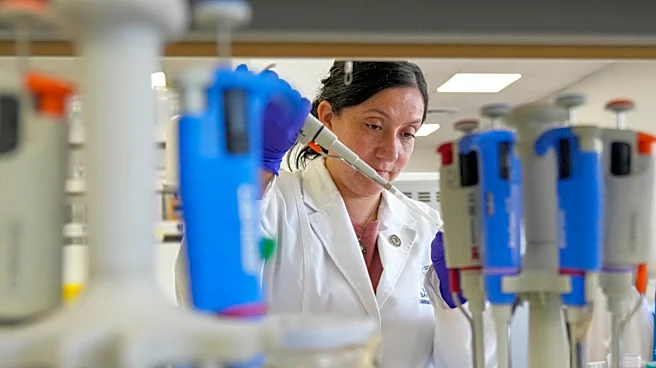
outbreak in the Democratic Republic of Congo (DRC). Three vaccine candidates are being developed by IAVI, the University of Oxford, and Moderna. IAVI's candidate, which uses a vesicular stomatitis virus to deliver immune instructions, is the most advanced in testing. Despite the funding, it will take months to determine the vaccines' efficacy and even longer for widespread use. The urgency of the situation is underscored by the outbreak's scale, which is one of the largest on record.
Why It's Important?
The development of a vaccine for the Bundibugyo strain is crucial as the current approved Ebola vaccine, Ervebo, is not effective against this strain. The outbreak in the DRC poses a significant public health threat, and a successful vaccine could prevent further spread and save lives. The funding from CEPI and Gavi highlights the global commitment to addressing this health crisis. However, the U.S.'s role in this effort is uncertain due to recent changes in its involvement with the World Health Organization and dismantling of related research infrastructure.
What's Next?
The next steps involve conducting clinical trials in the DRC and Uganda, where the Bundibugyo strain is prevalent. These trials will face challenges due to the region's ongoing conflict and misinformation about vaccines. Engaging local communities and ensuring ethical trial practices will be critical. The success of these trials could lead to a new vaccine that significantly impacts future Ebola outbreaks.