





What's Happening?
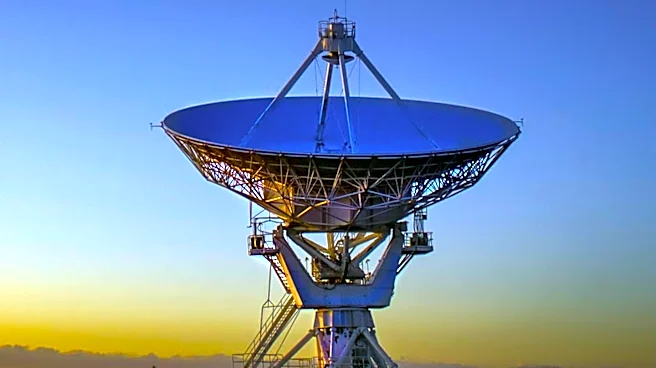
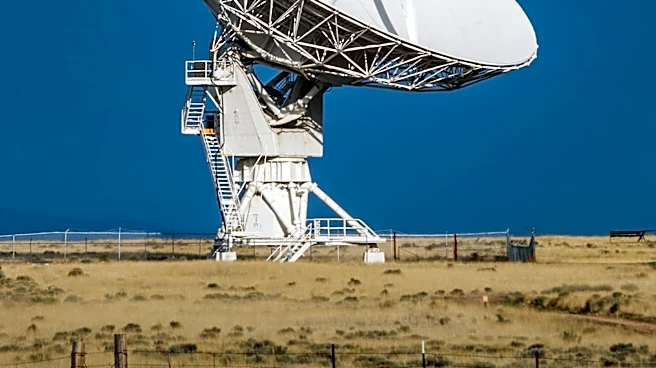
An international team of astronomers, utilizing the Atacama Large Millimeter/submillimeter Array (ALMA), has achieved the first detection in space of fully deuterated methanol (CD3OD). This rare variant of methanol, where all hydrogen atoms are replaced
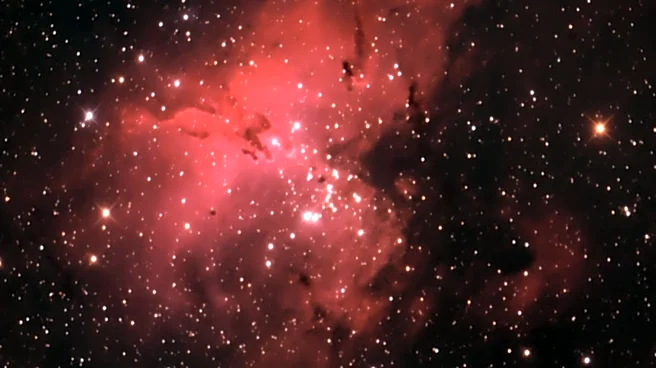
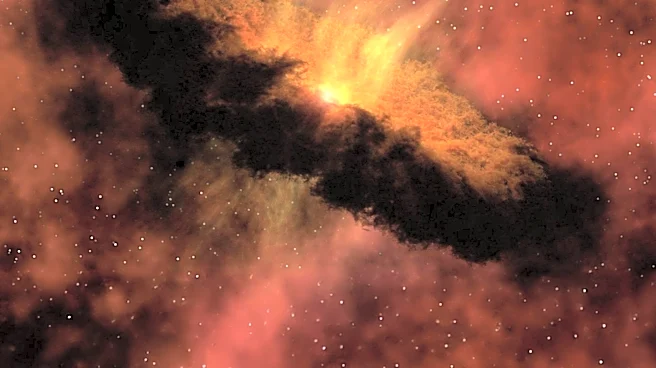
by deuterium (a heavier form of hydrogen), was discovered around the young protostar 'IRAS 4A2' within the Perseus molecular cloud, approximately 1,000 light-years from Earth. This finding is part of the ALMA COMPASS (Complex Organic Molecules in Protostars with ALMA Spectral Surveys) Large Program, which studies 11 nearby young, Sun-like stars. The COMPASS program, requiring over 100 hours of telescope time, aims to systematically investigate the chemical compositions around these nascent stars. The detection of this specific methanol variant allows astronomers to delve deeper into the physical and chemical conditions prevalent during the earliest stages of star formation, providing crucial insights into how molecular complexity evolves in these environments.
Why It's Important?
The detection of fully deuterated methanol is significant for understanding the origins of organic molecules in space and their potential role in the formation of planetary systems and life. Methanol is a fundamental organic alcohol, acting as a precursor for more complex molecules. By identifying its deuterated form, scientists can gain a more detailed understanding of the chemical pathways and processes occurring in the cold, dense regions where stars and planets are born. This discovery contributes to the broader field of astrochemistry, helping to trace the journey of material from interstellar clouds to the disks where planets may eventually form. The COMPASS program's systematic comparison of young stellar systems provides a framework for understanding how chemical complexity develops across different environments and evolutionary stages, which is vital for assessing the potential for life beyond Earth.
What's Next?
The COMPASS team plans to continue analyzing the extensive dataset collected from the 11 young stars. Future research will focus on extending the analysis to other molecular species detected across all sources. A primary objective is to determine whether variations in chemical composition among young stars are inherited from their birth environments or develop as the stars evolve. This ongoing analysis, combined with laboratory studies and chemical modeling, is expected to uncover new aspects of how chemistry progresses on the path to planet formation. The initial results, presented in seven papers in Astronomy & Astrophysics, represent only the beginning of the scientific insights anticipated from this comprehensive survey, promising further discoveries about the chemical evolution of stellar systems.
Beyond the Headlines
This discovery highlights the advanced capabilities of observatories like ALMA in pushing the boundaries of astrochemistry. The ability to detect rare and previously unseen chemical phenomena through sensitive spectral surveys underscores the importance of international collaborations in scientific research. The systematic study of organic molecules in protostellar environments has profound implications for astrobiology, as it helps to bridge the gap between the chemical building blocks found in space and the emergence of life. Understanding the chemical 'cocktail' present during star formation could offer clues about the likelihood of life arising on exoplanets, suggesting that the necessary molecular precursors might be more widespread than previously thought. This research contributes to humanity's fundamental quest to understand our cosmic origins and the potential for life elsewhere in the universe.